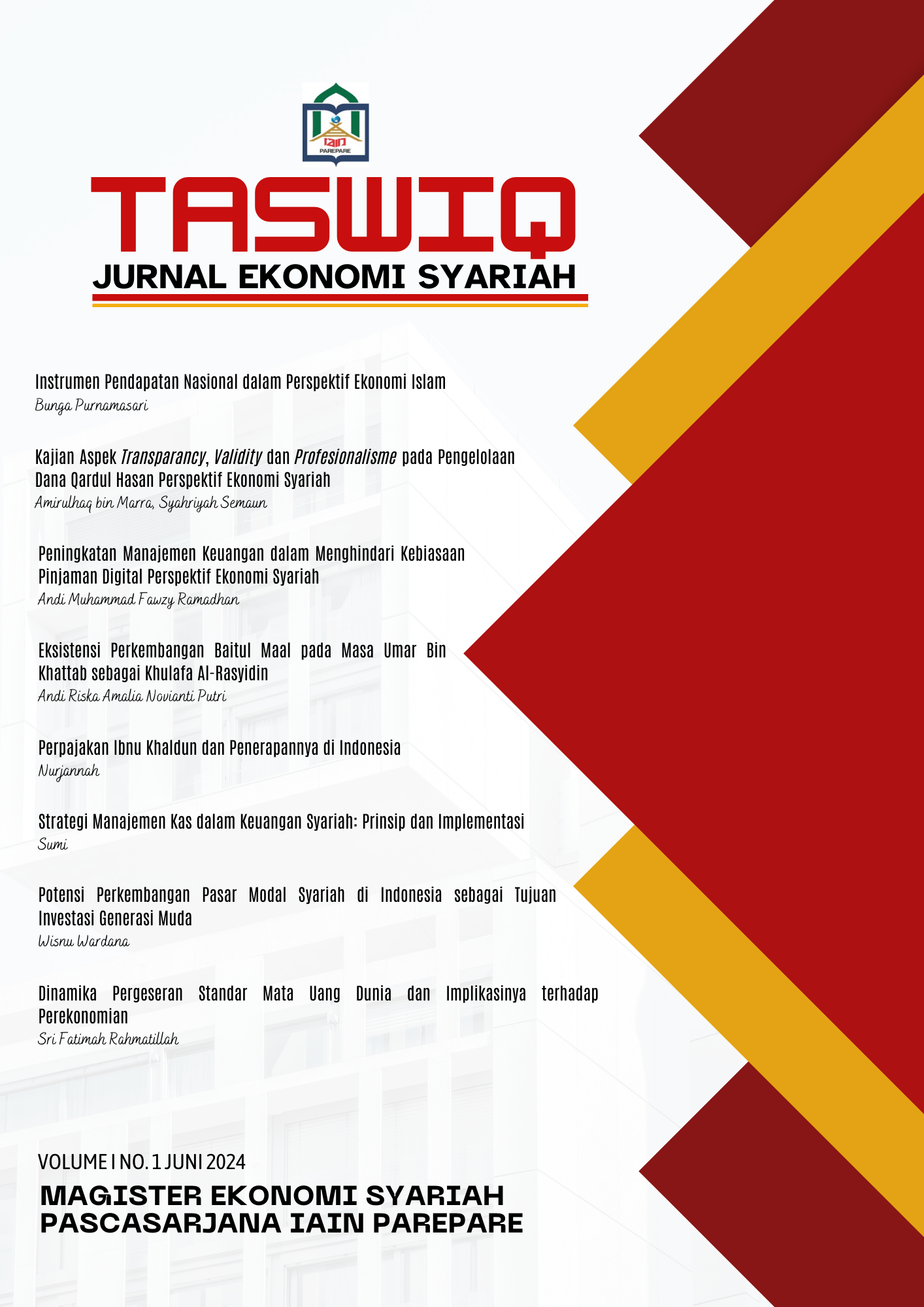
Perpajakan Ibnu Khaldun dan Penerapannya di Indonesia
DOI:
https://doi.org/10.35905/taswiq.v1i1.10710Keywords:
Ibn Khaldun, Tax, IndonesiaAbstract
Public finance is a financial concept managed by the state government for the sake of improving people's living standards. Taxes are one of the government's largest revenues, taxes are managed directly by the government which is collected from the community which is the obligation of taxpayers to pay it. Taxation according to Ibn Khaldun greatly affects the development of a country, therefore this research was conducted with the aim of finding out Ibn Khaldun's taxation system and its application in Indonesia. This research is a type of literature research. The data analysis techniques used are deductive, inductive and historical methods. The results of the study can be stated that the tax system in Indonesia with Ibn Khaldun thinkers has a similarity and difference, which is the similarity in several types of taxes applied by kharaj equivalent to the United Nations, Usyr equivalent to Customs Tax, in addition to VAT. the form of taxation applied by Indonesia according to Ibn Khaldun will weaken the economy if the levy is too high, taxes are required by all Indonesia citizens and qualified foreign citizens which are mandatory and coercive so that if it is not carried out it will be subject to administrative sanctions or criminal sanctions because it is bound by the laws that have been set, while the tax system according to Ibn Khaldun in collection and management The tax treats everyone the same without giving an exception just because of property or throne even if the person is a family or relative, besides that the tax is only charged to the person who can afford to pay it with the lowest collection system.References
Abdurahman Kasdi. (2019). Pemikiran Ibnu Khaldun dalam Perspektif Sosiologi dan Filsafat Sejarah. STAIN Kudus, 2(1).
Achmad Tjhahjono. (2018). Perpjakan. UPP AMP YKPN.
Al-Alimah Abdurrahman bin Muhammad bin Ibnu Khaldun. (2001). Mukaddimah Ibnu Khaldun (A. Z. Masturi, Irham, Malik Supar (trans.); 3rd ed.). Pustaka Al- Kautsar.
Alexander Thian. (2021). Hukum Pajak. Andi Offset.
Ekonomi Syariah dan Terapan. (2019). Konsep Ekonomi Politik dalam Perspektif Ibnu Khaldun. 6(1).
Ikhawa Abidin. (2011). Masa Depan Ilmu Ekonomi. Gema Insani Press.
Kamaruddin. (n.d.). Pemikiran Politik Ibnu Khaldun dan Pembentukan Teori Sosiologi Politik.
Mardiasmo. (2006). Perpajakan. C.V. Andi Offset.
Muh. Fudail Rahman. (2013). Sumber-sumber pendapatan dan Pengeluaran Negara Islam. 5(2).
Nurul Huda. (2012). Keuangan Publik Islam. Kencana Prenada Media Group.
Rifyal Zuhdi Gustom. (2019). Keuangan Publik Islam : Zakat sebagai Instrumen Utama Keuangan Negara. Universitas Airlangga, 19.
Rizka Novita Pertiwi. (2014). Analaisis Efektivitas Pemungutan Pajak Bumi dan Bangunan (Studi Pada Dinas Pendapatan, Pengelolaan Keuangan dan Aset kota Probolinggo). 3(1).
Achmad Tjhahjono. (2018). Perpjakan. UPP AMP YKPN.
Al-Alimah Abdurrahman bin Muhammad bin Ibnu Khaldun. (2001). Mukaddimah Ibnu Khaldun (A. Z. Masturi, Irham, Malik Supar (trans.); 3rd ed.). Pustaka Al- Kautsar.
Alexander Thian. (2021). Hukum Pajak. Andi Offset.
Ekonomi Syariah dan Terapan. (2019). Konsep Ekonomi Politik dalam Perspektif Ibnu Khaldun. 6(1).
Ikhawa Abidin. (2011). Masa Depan Ilmu Ekonomi. Gema Insani Press.
Kamaruddin. (n.d.). Pemikiran Politik Ibnu Khaldun dan Pembentukan Teori Sosiologi Politik.
Mardiasmo. (2006). Perpajakan. C.V. Andi Offset.
Muh. Fudail Rahman. (2013). Sumber-sumber pendapatan dan Pengeluaran Negara Islam. 5(2).
Nurul Huda. (2012). Keuangan Publik Islam. Kencana Prenada Media Group.
Rifyal Zuhdi Gustom. (2019). Keuangan Publik Islam : Zakat sebagai Instrumen Utama Keuangan Negara. Universitas Airlangga, 19.
Rizka Novita Pertiwi. (2014). Analaisis Efektivitas Pemungutan Pajak Bumi dan Bangunan (Studi Pada Dinas Pendapatan, Pengelolaan Keuangan dan Aset kota Probolinggo). 3(1).
Downloads
Published
2024-10-10
Issue
Section
Articles


2.png)