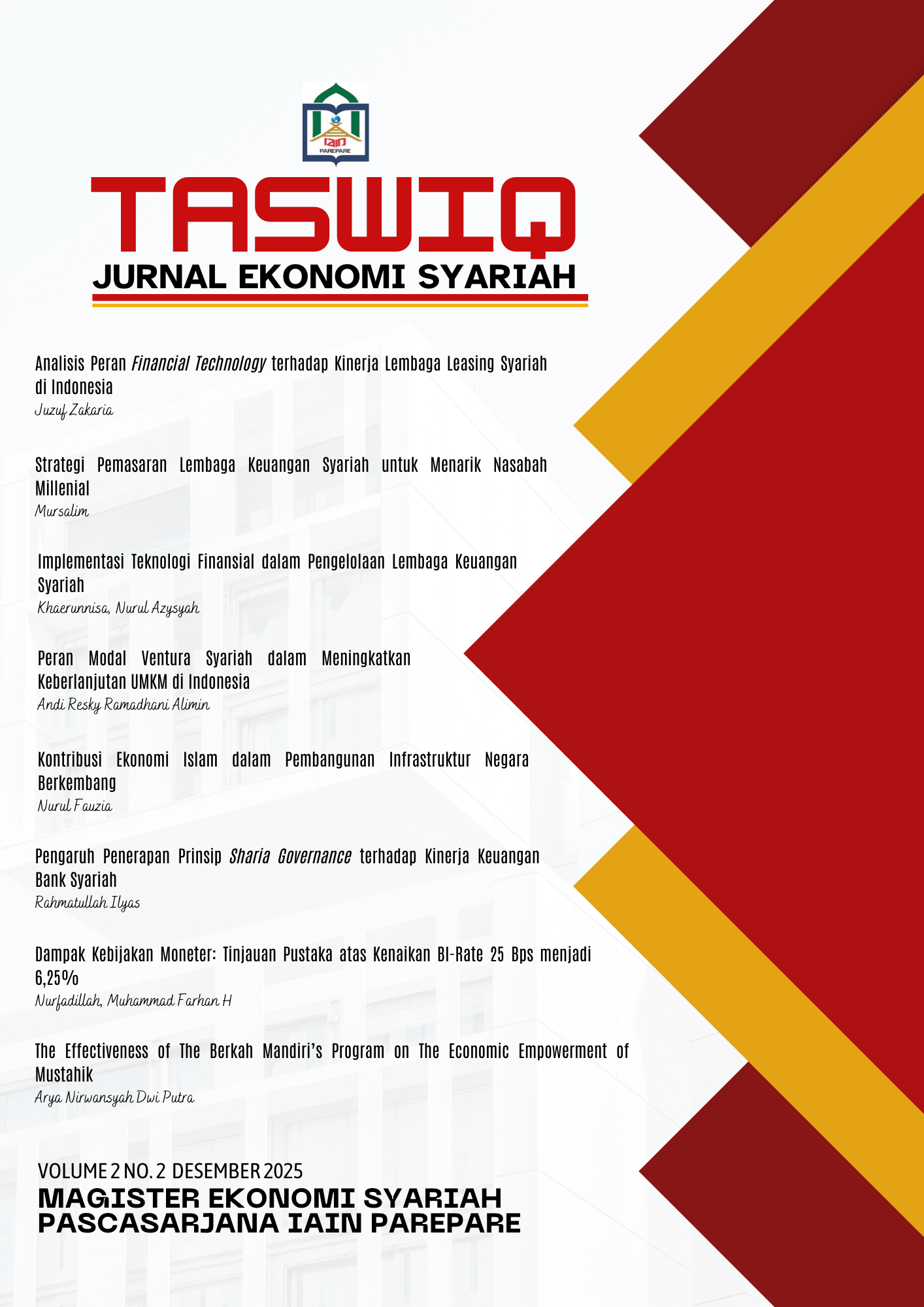
Analisis Peran Financial Technology terhadap Kinerja Lembaga Leasing Syariah di Indonesia
DOI:
https://doi.org/10.35905/taswiq.v2i2.12600Keywords:
Financial Technology, Sharia Leasing, Institutional Performance, Sharia EconomyAbstract
his study aims to explore the role of Financial Technology (fintech) in enhancing the performance of sharia leasing institutions in Indonesia. With the background of increasing digitalization in the financial sector, this research focuses on key variables including operational efficiency, service accessibility, and compliance with sharia principles. The methodology employed is a mixed methods approach, with the sample population consisting of sharia leasing institutions and fintech service users. Data were collected through surveys, interviews, and document analysis to gain a comprehensive understanding of the impact of fintech. The findings indicate that the implementation of fintech significantly improves the operational efficiency of sharia leasing institutions, facilitates service access for the community, and ensures compliance with sharia principles. These findings have important implications for the development of sharia leasing services in the digital age, where sharia financial institutions need to adapt to technology to meet customer needs and enhance competitiveness. This study also recommends the necessity of collaboration between sharia leasing institutions and fintech companies to create better innovations in sharia financial services.References
Ahmed, U., Fida, B. A., & Asmi, A. A. A. (2023). The Determinants of Bank Selection Criteria Among Students of Higher Learning and Their Implications for the Islamic Banking Industry in Oman. 70–82. https://doi.org/10.2991/978-94-6463-110-4_7
Amelia, R., & Wibowo, D. (2020). Analysis of Public Interest in Sharia Investing Through Financial Technology Companies. https://doi.org/10.2991/aebmr.k.200915.089
Arisyahidin. (2023). Application of Financial Technology and Increasing Literacy Finance for MSME Business Strengthening Strategy. 1619–1626. https://doi.org/10.2991/978-2-38476-118-0_184
Dutta, A. (2023). Financial Technology Development in Banking During the COVID Pandemic. https://doi.org/10.26577/sedgch.2023v1ca8
Echchabi, A., Omar, M., Ayedh, A. M., & Sibanda, W. (2021). FinTech Start-Ups Financing in Islamic Banks in Oman: Qualitative Evidence. https://doi.org/10.2991/aer.k.210121.045
Harahap, K. (2024). The Effect of Financial Inclusion, Financial Literacy on Sharia Fintech Acceptance in SMEs Using the Technology Acceptance Model (TAM) in Medan City. https://doi.org/10.4108/eai.24-10-2023.2342369
Harmadi, Untoro, W., Trinugroho, I., & Atmaji. (2022). The Effect of Fintech on Conventional Bank Performance and Bank Risk. 140–152. https://doi.org/10.2991/978-94-6463-066-4_13
Isa, M., & Suryomurti, W. (2023). Sentiment Analysis on the Perception of Sharia Fintech in Indonesia. 146–169. https://doi.org/10.2991/978-94-6463-176-0_11
Junaeni, I. (2023). Interaction Model of Macroeconomic and Microeconomic Variables on Growth Volatility of Various Types of Financing in Islamic Banks. 266–287. https://doi.org/10.2991/978-94-6463-176-0_18
Latifah, F. N., Mawardi, I., Wardhana, B., & Andriyani, N. (2023). Resilience in Crisis: Indonesia’s Islamic Fintech Response to Covid-19. 542–548. https://doi.org/10.2991/978-2-38476-052-7_59
Memahami Konsep Hak Asasi Manusia Dalam Perspektif HAM Internasional Dan Nasional. (2023). https://doi.org/10.46924/pyk.12
Pauliukevičienė, G., & Stankevičienė, J. (2022). Assessment of the Impact of Sustainable Development Goals Indicators on the Sustainable Development of Fintech Industry. https://doi.org/10.3846/bm.2022.759
Pengantar Akustik Kelautan. (2024). https://doi.org/10.62083/1q0rw680
Rabbani, M. R., Abdulla, Y., Basahr, A., Khan, S., & Ali, M. (2020). Embracing of Fintech in Islamic Finance in the Post COVID Era. 1230–1234. https://doi.org/10.1109/dasa51403.2020.9317196
Rickinghall, M. (2022). Impact of Fintech on Islamic Bank Performance in Malaysia: Descriptive Study on Fintech. https://doi.org/10.3233/faia220088
Santoso, B. (2020). The Role of Micro, Small, and Medium Enterprises Toward Sustainable Development Goals Through Islamic Financial Institutions BT - Proceedings of the 2nd Social and Humaniora Research Symposium (SoRes 2019). 585–595. https://doi.org/10.2991/assehr.k.200225.127
Santoso, J. (2023). Can the Implementation of FinTech Improve Banking Performance? Evidence From Banking Industry in Indonesia. 27–33. https://doi.org/10.2991/978-94-6463-244-6_6
Strategi Kebijakan Hilirisasi Migas Dan Minerba Yang Efektif Untuk Indonesia. (2024). https://doi.org/10.33116/pyc-br-5
Utomo, H. S., Budihantho, M., & Listyorini, S. (2022). The Effect of Market Orientation on the Use of Fintech and Utilization of Online-Based Marketing Technology and Its Implications on SME Marketing Performance. https://doi.org/10.4108/eai.3-8-2021.2315084
Wahyuni, H. C. (2023). Manajemen Teknologi Pada Industri. https://doi.org/10.21070/2023/978-623-464-081-6
Wang, L., Mutakin, A., Sukardi, B., Iswanaji, C., Mardani, D. A., Rahmanto, D. N. A., Setyawan, E., Hartina, H., Shiddieqy, H. A., Ishak, I., Jamaludin, J., Riodini, I., Arsyad, K., Layli, M., Misno, M., Holle, M. H., Farisi, M. S. A., Hasbi, M. Z. N., Tubastuvi, N., … Santoso, W. P. (2022). Fintech Dan Keuangan Islam: Teori Dan Praktik. https://doi.org/10.55216/publica.17
Yahya, A. (2021). Sharia Fintech Development in Indonesia. https://doi.org/10.4108/eai.17-7-2020.2302984
Yang, T., Wang, X., Zhang, T., & Wang, Z. (2023). Geographical Distance, Fintech and Leasing Contract Design. 1686–1690. https://doi.org/10.2991/978-94-6463-098-5_190
Amelia, R., & Wibowo, D. (2020). Analysis of Public Interest in Sharia Investing Through Financial Technology Companies. https://doi.org/10.2991/aebmr.k.200915.089
Arisyahidin. (2023). Application of Financial Technology and Increasing Literacy Finance for MSME Business Strengthening Strategy. 1619–1626. https://doi.org/10.2991/978-2-38476-118-0_184
Dutta, A. (2023). Financial Technology Development in Banking During the COVID Pandemic. https://doi.org/10.26577/sedgch.2023v1ca8
Echchabi, A., Omar, M., Ayedh, A. M., & Sibanda, W. (2021). FinTech Start-Ups Financing in Islamic Banks in Oman: Qualitative Evidence. https://doi.org/10.2991/aer.k.210121.045
Harahap, K. (2024). The Effect of Financial Inclusion, Financial Literacy on Sharia Fintech Acceptance in SMEs Using the Technology Acceptance Model (TAM) in Medan City. https://doi.org/10.4108/eai.24-10-2023.2342369
Harmadi, Untoro, W., Trinugroho, I., & Atmaji. (2022). The Effect of Fintech on Conventional Bank Performance and Bank Risk. 140–152. https://doi.org/10.2991/978-94-6463-066-4_13
Isa, M., & Suryomurti, W. (2023). Sentiment Analysis on the Perception of Sharia Fintech in Indonesia. 146–169. https://doi.org/10.2991/978-94-6463-176-0_11
Junaeni, I. (2023). Interaction Model of Macroeconomic and Microeconomic Variables on Growth Volatility of Various Types of Financing in Islamic Banks. 266–287. https://doi.org/10.2991/978-94-6463-176-0_18
Latifah, F. N., Mawardi, I., Wardhana, B., & Andriyani, N. (2023). Resilience in Crisis: Indonesia’s Islamic Fintech Response to Covid-19. 542–548. https://doi.org/10.2991/978-2-38476-052-7_59
Memahami Konsep Hak Asasi Manusia Dalam Perspektif HAM Internasional Dan Nasional. (2023). https://doi.org/10.46924/pyk.12
Pauliukevičienė, G., & Stankevičienė, J. (2022). Assessment of the Impact of Sustainable Development Goals Indicators on the Sustainable Development of Fintech Industry. https://doi.org/10.3846/bm.2022.759
Pengantar Akustik Kelautan. (2024). https://doi.org/10.62083/1q0rw680
Rabbani, M. R., Abdulla, Y., Basahr, A., Khan, S., & Ali, M. (2020). Embracing of Fintech in Islamic Finance in the Post COVID Era. 1230–1234. https://doi.org/10.1109/dasa51403.2020.9317196
Rickinghall, M. (2022). Impact of Fintech on Islamic Bank Performance in Malaysia: Descriptive Study on Fintech. https://doi.org/10.3233/faia220088
Santoso, B. (2020). The Role of Micro, Small, and Medium Enterprises Toward Sustainable Development Goals Through Islamic Financial Institutions BT - Proceedings of the 2nd Social and Humaniora Research Symposium (SoRes 2019). 585–595. https://doi.org/10.2991/assehr.k.200225.127
Santoso, J. (2023). Can the Implementation of FinTech Improve Banking Performance? Evidence From Banking Industry in Indonesia. 27–33. https://doi.org/10.2991/978-94-6463-244-6_6
Strategi Kebijakan Hilirisasi Migas Dan Minerba Yang Efektif Untuk Indonesia. (2024). https://doi.org/10.33116/pyc-br-5
Utomo, H. S., Budihantho, M., & Listyorini, S. (2022). The Effect of Market Orientation on the Use of Fintech and Utilization of Online-Based Marketing Technology and Its Implications on SME Marketing Performance. https://doi.org/10.4108/eai.3-8-2021.2315084
Wahyuni, H. C. (2023). Manajemen Teknologi Pada Industri. https://doi.org/10.21070/2023/978-623-464-081-6
Wang, L., Mutakin, A., Sukardi, B., Iswanaji, C., Mardani, D. A., Rahmanto, D. N. A., Setyawan, E., Hartina, H., Shiddieqy, H. A., Ishak, I., Jamaludin, J., Riodini, I., Arsyad, K., Layli, M., Misno, M., Holle, M. H., Farisi, M. S. A., Hasbi, M. Z. N., Tubastuvi, N., … Santoso, W. P. (2022). Fintech Dan Keuangan Islam: Teori Dan Praktik. https://doi.org/10.55216/publica.17
Yahya, A. (2021). Sharia Fintech Development in Indonesia. https://doi.org/10.4108/eai.17-7-2020.2302984
Yang, T., Wang, X., Zhang, T., & Wang, Z. (2023). Geographical Distance, Fintech and Leasing Contract Design. 1686–1690. https://doi.org/10.2991/978-94-6463-098-5_190
Downloads
Published
2025-12-03
Issue
Section
Articles


2.png)