Article Sidebar
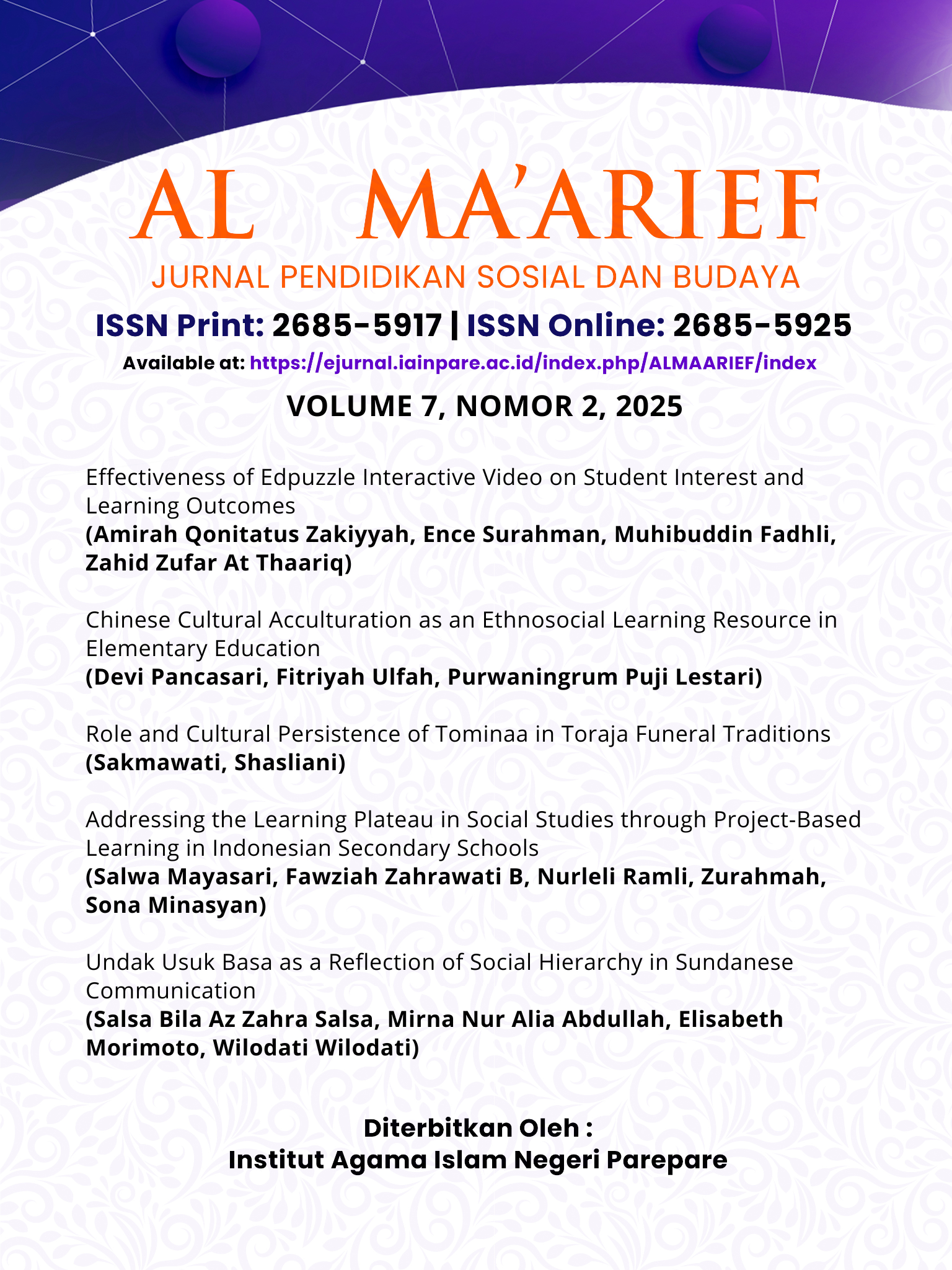
Main Article Content
Abstract
Background: Undak Usuk Basa, the system of speech levels in Sundanese society, functions not only as a medium of communication but also as a representation of social hierarchy and politeness. This study contributes by highlighting the socio-pragmatic functions of Undak Usuk Basa in the modern context, an aspect often overlooked in previous research that has predominantly focused on its decline.
Purpose: The purpose of this research is to analyze how Undak Usuk Basa encodes social hierarchy and how modern social changes influence its patterns of use.
Method: The method employed is a literature study, analyzing 25 selected articles out of an initial 45 obtained from databases such as ScienceDirect, Garuda, Google Scholar, Sinta, and DOAJ, covering publications from the past decade. The selection process was based on criteria of topical relevance, credibility, and both theoretical and empirical foundations.
Results: The findings reveal that Undak Usuk Basa regulates language choice based on age, social status, and interpersonal relations, making it an essential instrument for maintaining social harmony. However, globalization, urbanization, and the penetration of digital media have fostered more egalitarian and practical communication patterns, particularly among younger generations, leading to a decline in the use of speech levels.
Theoretical implication: The study affirms that linguistic hierarchy functions as cultural capital, reflecting and sustaining social structures.
Practical implication: The findings suggest the need for preservation through education, digital media, and cultural programs.
Keywords
Article Details
References
- Adela, D., & Al-Akmam, M. (2024). Upaya pelestarian budaya Sunda di sekolah dasar. Jurnal Belaindika: Pembelajaran dan Inovasi Pendidikan, 6(2), 191–198. https://belaindika.nusaputra.ac.id/index
- Ambarita, E. (2019). Ancaman kepunahan bahasa-bahasa daerah di era globalisasi: Sebab-musabab [Universitas Methodist Indonesia]. https://doi.org/10.13140/RG.2.2.22542.61761
- Andriyanti, E. (2019). Language shift among Javanese youth and their perception of local and national identities. GEMA Online Journal of Language Studies, 19(3), 109–125. https://doi.org/10.17576/gema-2019-1903-07
- Atmawati, D. (2021). Language politeness in the Javanese verb speech level. Lingua Cultura, 15(1), 1–8. https://doi.org/10.21512/lc.v15i1.7109
- Bourdieu, P. (1991). Language and symbolic power. Harvard University Press.
- Brown, L. (2015). Expressive, social and gendered meanings of Korean honorifics. Korean Linguistics, 17(2), 217–235. https://doi.org/10.1075/kl.17.2.06bro
- Brown, L., & Whitman, J. (2015). Honorifics and politeness in Korean. Korean Linguistics, 17(2), 127–131. https://doi.org/10.1075/kl.17.2.001int
- Brown, P., & Levinson, S. C. (1987). Politeness: Some universals in language usage. Cambridge University Press. https://doi.org/10.1017/CBO9780511813085
- Crystal, D. (2011). Internet linguistics. Routledge. https://doi.org/10.4324/9780203830901
- Fathi, S. (2024). Revisiting Brown and Levinson’s theory of politeness. European Journal of Language and Culture Studies, 3(5), 1–11. https://doi.org/10.24018/ejlang.2024.3.5.137
- Fishman, J. (1991). Reversing language shift. Multilingual Matters.
- Haerudin, D. (2019). The role of parents in Sundanese language preservation. Advances in Social Science, Education and Humanities Research, 178, 45–52. https://doi.org/10.2991/icoie-18.2019.7
- Juliani, N. R. D. C., Nur, H. A., Khoirudin, I., Triana, R. A., Haryanti, A., Febrianti, E. S., Widiastuti, E., Sulthon, F., Firmansyah, I., & Nugraha, A. H. (2023). Pengenalan Undak Usuk Bahasa Sunda pada anak usia dini di Desa Bakom. JASSA: Jurnal Abdimas Sang Pencerah, 1(1), 14–17. https://doi.org/10.33222/jassa.v1i1.3357
- Koentjaraningrat. (2009). Pengantar ilmu antropologi. Rineka Cipta.
- Kurniawan, E., Yuliawati, S., Suganda, S. P., & Yuliawati, S. (2025). Multilingualism and hybrid identities among Indonesian youth in the indigenous community of Baduy. International Journal of Multilingualism, 1–20. https://doi.org/10.1080/14790718.2025.2475008
- Kurniawati, W., Emzir, E., & Akhadiah, S. (2021). Language vitality of Sundanese in Cianjur City. Jurnal Pendidikan Bahasa dan Sastra, 21(1), 37–50. https://doi.org/10.17509/bs_jpbsp.v21i1.36657
- Maruki, Y. (2022). Keigo to use and to be used: Reevaluation of keigo learning in Japanese language classes. Journal of Japanese Language Education and Linguistics, 6(2), 142–153. https://doi.org/10.18196/jjlel.v6i2.14874
- Nkirote, A. (2024). The pragmatics of politeness in cross-cultural communication. European Journal of Linguistics, 3(3), 27–39. https://doi.org/10.47941/ejl.2052
- Nur Lisdawati, L., Baharman, Fitriansal, & Gaffar, M. S. (2025). Upaya pelestarian bahasa daerah melalui Festival Tunas Bahasa Ibu. Jurnal Abdimas Indonesia, 5(2), 45–57. https://www.dmi-journals.org/jai/article/view/1522
- Pangestu, M. A., & Sudjianto, D. (2021). Analisis struktur dan pemakaian keigo dan perbandingannya dengan Undak Usuk Basa Sunda. IDEA: Sastra Jepang, 3(1), 1–11. https://doi.org/10.33751/idea.v3i1.3328
- Ramadhani, S. I., Zahwan, N., & Sinaga, N. M. (2024). Pengaruh globalisasi terhadap bahasa daerah. JCRD: Journal of Citizen Research and Development, 1(2), 25–32. https://doi.org/10.57235/jcrd.v1i2.3896
- Ramanda, A. (2023). Aplikasi Sunda Dictionary (SUNDAKU) sebagai media pembelajaran untuk mempertahankan budaya [Undergraduate thesis, Universitas Bina Sarana Informatika]. https://repository.bsi.ac.id/repo/42155
- Riyanto, S. (2018). Sikap berbahasa para remaja berbahasa Sunda di Kabupaten Bandung: Suatu kajian sosiolinguistik. Metalingua Jurnal Penelitian Bahasa, 15(2), 163–172. https://doi.org/10.26499/metalingua.v15i2.62
- Robiah, D., & Hernawan. (2021). Perubahan, pergeseran, dan pemertahanan bahasa Sunda di lingkungan Universitas Pendidikan Indonesia. Jurnal Kajian Bahasa, Sastra, dan Budaya Daerah serta Pengajarannya, 12(1), 27–34. https://doi.org/10.17509/jlb.v12i1
- Silitonga, F., & Astuti, L. (2018). From teaching of Sundanese’s teenager speaking ability in Batam: Spoken discourse analysis. International Journal of Language Teaching and Education, 2(3), 252–261. https://doi.org/10.22437/ijolte.v2i3.5182
- Sohn, H. (2017). Korean honorifics in contemporary use: Changes and continuities. Korean Linguistics, 17(2), 201–216. https://doi.org/10.1075/kl.17.2.05soh
- Spencer-Oatey, H. (2008). Politeness and rapport management. Routledge. http://wrap.warwick.ac.uk/171209
- Sudaryat, Y., & Nurhadi, J. (2020). Sundanese politeness reposition in Industrial Revolution Era 4.0. Advances in Social Science, Education and Humanities Research, 424, 312–319. https://doi.org/10.2991/assehr.k.200325.052
- Sumarlina, E., & Permana, R. (2024). Problematika tingkatan bahasa dan stratifikasi sosial dalam penggunaan Undak Usuk Bahasa Sunda. Kabuyutan: Jurnal Kajian Ilmu Sosial dan Humaniora Berbasis Kearifan Lokal, 3(3), 101–110. https://doi.org/10.61296/kabuyutan.v3i3.287
- Syaepul Uyun, A. (2022). Speech act and politeness in Sundanese language. English Pedagogy Journal, 110(2), 45–58. https://jurnal.masoemuniversity.ac.id/index.php/englishpedagogy
- Takiura, M. (2021). A view of the development of im/politeness theories from an East Asian language with honorification. Journal of Pragmatics, 178, 45–57. https://doi.org/10.1016/j.pragma.2021.04.015
- Trianto, I., Muniroh, R. D. D. A., Gunawan, W., Isnendes, R., & Wirza, Y. (2025). Language attitude of millennial Sundanese speakers: A sociolinguistic perspective. Jurnal Arbitrer, 12(2), 192–209. https://doi.org/10.25077/ar.12.2.192-209.2025
- Wahyuni, R. S. (2021). Analisis gaya bahasa sarkasme dalam bahasa Sunda warganet pada media sosial Facebook. Jurnal Metabasa, 2(1), 65–73. https://jurnal.unsil.ac.id/index.php/mbsi/article/view/4409
- Wehmeyer, A. (2014). Keigo in modern Japan: Polite language from Meiji to the present. University of Hawaii Press.
- Widianto, E. (2022). Pemertahanan bahasa daerah melalui pembelajaran dan kegiatan di sekolah. Jurnal Pendidikan Bahasa Daerah, 5(2), 15–27. https://jurnal.univ.ac.id/jpbd/article/view/1522
References
Adela, D., & Al-Akmam, M. (2024). Upaya pelestarian budaya Sunda di sekolah dasar. Jurnal Belaindika: Pembelajaran dan Inovasi Pendidikan, 6(2), 191–198. https://belaindika.nusaputra.ac.id/index
Ambarita, E. (2019). Ancaman kepunahan bahasa-bahasa daerah di era globalisasi: Sebab-musabab [Universitas Methodist Indonesia]. https://doi.org/10.13140/RG.2.2.22542.61761
Andriyanti, E. (2019). Language shift among Javanese youth and their perception of local and national identities. GEMA Online Journal of Language Studies, 19(3), 109–125. https://doi.org/10.17576/gema-2019-1903-07
Atmawati, D. (2021). Language politeness in the Javanese verb speech level. Lingua Cultura, 15(1), 1–8. https://doi.org/10.21512/lc.v15i1.7109
Bourdieu, P. (1991). Language and symbolic power. Harvard University Press.
Brown, L. (2015). Expressive, social and gendered meanings of Korean honorifics. Korean Linguistics, 17(2), 217–235. https://doi.org/10.1075/kl.17.2.06bro
Brown, L., & Whitman, J. (2015). Honorifics and politeness in Korean. Korean Linguistics, 17(2), 127–131. https://doi.org/10.1075/kl.17.2.001int
Brown, P., & Levinson, S. C. (1987). Politeness: Some universals in language usage. Cambridge University Press. https://doi.org/10.1017/CBO9780511813085
Crystal, D. (2011). Internet linguistics. Routledge. https://doi.org/10.4324/9780203830901
Fathi, S. (2024). Revisiting Brown and Levinson’s theory of politeness. European Journal of Language and Culture Studies, 3(5), 1–11. https://doi.org/10.24018/ejlang.2024.3.5.137
Fishman, J. (1991). Reversing language shift. Multilingual Matters.
Haerudin, D. (2019). The role of parents in Sundanese language preservation. Advances in Social Science, Education and Humanities Research, 178, 45–52. https://doi.org/10.2991/icoie-18.2019.7
Juliani, N. R. D. C., Nur, H. A., Khoirudin, I., Triana, R. A., Haryanti, A., Febrianti, E. S., Widiastuti, E., Sulthon, F., Firmansyah, I., & Nugraha, A. H. (2023). Pengenalan Undak Usuk Bahasa Sunda pada anak usia dini di Desa Bakom. JASSA: Jurnal Abdimas Sang Pencerah, 1(1), 14–17. https://doi.org/10.33222/jassa.v1i1.3357
Koentjaraningrat. (2009). Pengantar ilmu antropologi. Rineka Cipta.
Kurniawan, E., Yuliawati, S., Suganda, S. P., & Yuliawati, S. (2025). Multilingualism and hybrid identities among Indonesian youth in the indigenous community of Baduy. International Journal of Multilingualism, 1–20. https://doi.org/10.1080/14790718.2025.2475008
Kurniawati, W., Emzir, E., & Akhadiah, S. (2021). Language vitality of Sundanese in Cianjur City. Jurnal Pendidikan Bahasa dan Sastra, 21(1), 37–50. https://doi.org/10.17509/bs_jpbsp.v21i1.36657
Maruki, Y. (2022). Keigo to use and to be used: Reevaluation of keigo learning in Japanese language classes. Journal of Japanese Language Education and Linguistics, 6(2), 142–153. https://doi.org/10.18196/jjlel.v6i2.14874
Nkirote, A. (2024). The pragmatics of politeness in cross-cultural communication. European Journal of Linguistics, 3(3), 27–39. https://doi.org/10.47941/ejl.2052
Nur Lisdawati, L., Baharman, Fitriansal, & Gaffar, M. S. (2025). Upaya pelestarian bahasa daerah melalui Festival Tunas Bahasa Ibu. Jurnal Abdimas Indonesia, 5(2), 45–57. https://www.dmi-journals.org/jai/article/view/1522
Pangestu, M. A., & Sudjianto, D. (2021). Analisis struktur dan pemakaian keigo dan perbandingannya dengan Undak Usuk Basa Sunda. IDEA: Sastra Jepang, 3(1), 1–11. https://doi.org/10.33751/idea.v3i1.3328
Ramadhani, S. I., Zahwan, N., & Sinaga, N. M. (2024). Pengaruh globalisasi terhadap bahasa daerah. JCRD: Journal of Citizen Research and Development, 1(2), 25–32. https://doi.org/10.57235/jcrd.v1i2.3896
Ramanda, A. (2023). Aplikasi Sunda Dictionary (SUNDAKU) sebagai media pembelajaran untuk mempertahankan budaya [Undergraduate thesis, Universitas Bina Sarana Informatika]. https://repository.bsi.ac.id/repo/42155
Riyanto, S. (2018). Sikap berbahasa para remaja berbahasa Sunda di Kabupaten Bandung: Suatu kajian sosiolinguistik. Metalingua Jurnal Penelitian Bahasa, 15(2), 163–172. https://doi.org/10.26499/metalingua.v15i2.62
Robiah, D., & Hernawan. (2021). Perubahan, pergeseran, dan pemertahanan bahasa Sunda di lingkungan Universitas Pendidikan Indonesia. Jurnal Kajian Bahasa, Sastra, dan Budaya Daerah serta Pengajarannya, 12(1), 27–34. https://doi.org/10.17509/jlb.v12i1
Silitonga, F., & Astuti, L. (2018). From teaching of Sundanese’s teenager speaking ability in Batam: Spoken discourse analysis. International Journal of Language Teaching and Education, 2(3), 252–261. https://doi.org/10.22437/ijolte.v2i3.5182
Sohn, H. (2017). Korean honorifics in contemporary use: Changes and continuities. Korean Linguistics, 17(2), 201–216. https://doi.org/10.1075/kl.17.2.05soh
Spencer-Oatey, H. (2008). Politeness and rapport management. Routledge. http://wrap.warwick.ac.uk/171209
Sudaryat, Y., & Nurhadi, J. (2020). Sundanese politeness reposition in Industrial Revolution Era 4.0. Advances in Social Science, Education and Humanities Research, 424, 312–319. https://doi.org/10.2991/assehr.k.200325.052
Sumarlina, E., & Permana, R. (2024). Problematika tingkatan bahasa dan stratifikasi sosial dalam penggunaan Undak Usuk Bahasa Sunda. Kabuyutan: Jurnal Kajian Ilmu Sosial dan Humaniora Berbasis Kearifan Lokal, 3(3), 101–110. https://doi.org/10.61296/kabuyutan.v3i3.287
Syaepul Uyun, A. (2022). Speech act and politeness in Sundanese language. English Pedagogy Journal, 110(2), 45–58. https://jurnal.masoemuniversity.ac.id/index.php/englishpedagogy
Takiura, M. (2021). A view of the development of im/politeness theories from an East Asian language with honorification. Journal of Pragmatics, 178, 45–57. https://doi.org/10.1016/j.pragma.2021.04.015
Trianto, I., Muniroh, R. D. D. A., Gunawan, W., Isnendes, R., & Wirza, Y. (2025). Language attitude of millennial Sundanese speakers: A sociolinguistic perspective. Jurnal Arbitrer, 12(2), 192–209. https://doi.org/10.25077/ar.12.2.192-209.2025
Wahyuni, R. S. (2021). Analisis gaya bahasa sarkasme dalam bahasa Sunda warganet pada media sosial Facebook. Jurnal Metabasa, 2(1), 65–73. https://jurnal.unsil.ac.id/index.php/mbsi/article/view/4409
Wehmeyer, A. (2014). Keigo in modern Japan: Polite language from Meiji to the present. University of Hawaii Press.
Widianto, E. (2022). Pemertahanan bahasa daerah melalui pembelajaran dan kegiatan di sekolah. Jurnal Pendidikan Bahasa Daerah, 5(2), 15–27. https://jurnal.univ.ac.id/jpbd/article/view/1522