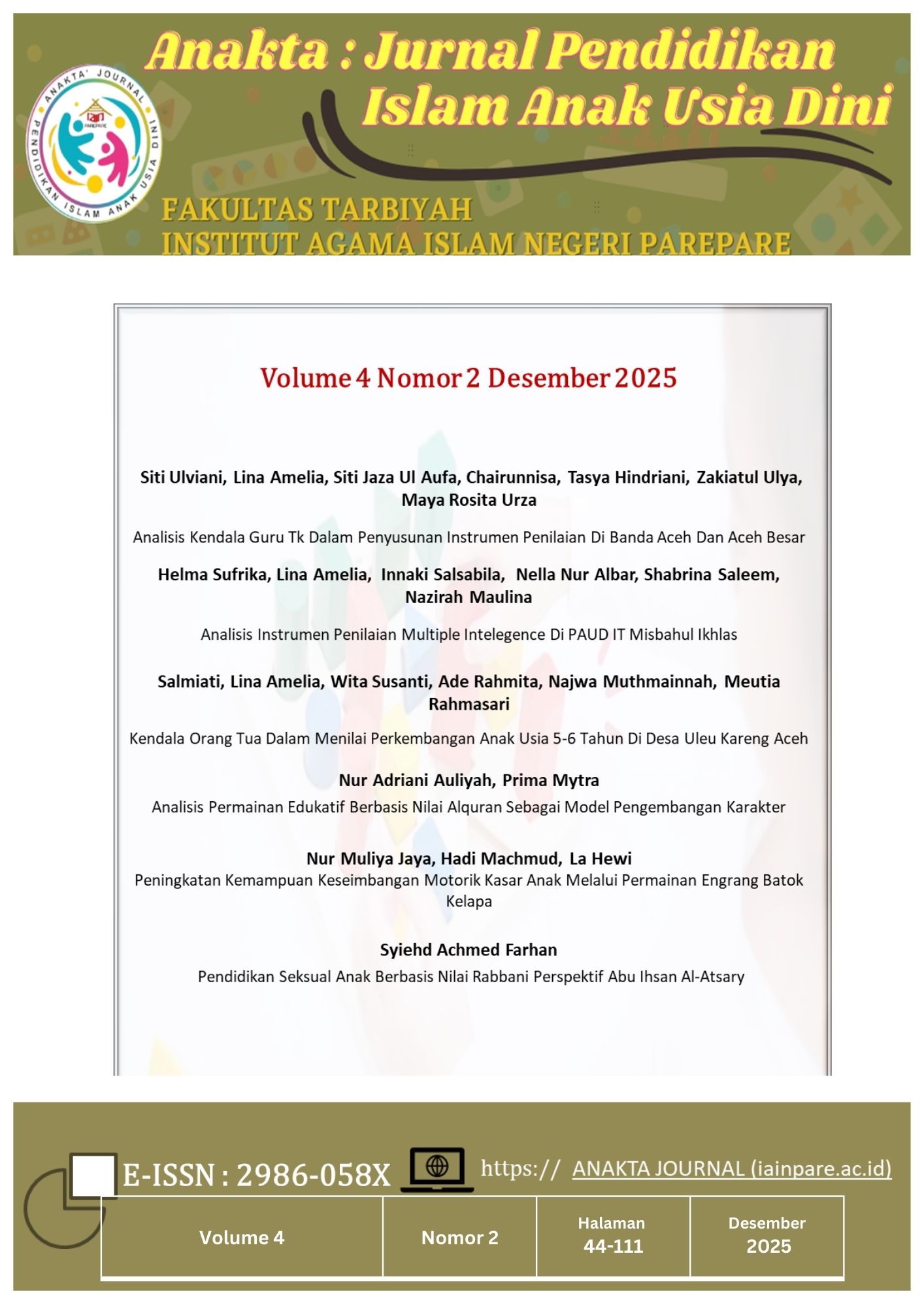
Kendala Orang Tua Dalam Menilai Perkembangan Anak Usia 5-6 Tahun Di Desa Uleu Kareng Aceh
DOI:
https://doi.org/10.35905/anakta.v4i2.15387Keywords:
parents, child development assessment, early childhood.Abstract
Early childhood development is a crucial stage in the formation of a child’s physical, cognitive, language, social, and emotional abilities. In practice, however, many parents face difficulties in assessing their children’s development comprehensively at home, due to limited knowledge, time constraints, lack of experience, and insufficient support from educators. This study aims to identify the challenges faced by parents in assessing the development of children aged five to six years at home in Desa Uleu Kareng and the strategies that can be implemented to overcome these challenges. This research uses a qualitative method with a descriptive approach. The subjects of the study were parents and children aged five to six years. Data were collected through direct observation of daily child activities and interviews with parents. The results indicate that parents face challenges such as limited knowledge about child development stages, time constraints, minimal support from educators, excessive influence of electronic devices, and an unsupportive home environment. Efforts to address these challenges include increasing parental knowledge, active involvement in children’s activities, utilization of appropriate learning media, collaboration with educators, and creating a conducive home environment. By implementing these strategies, parents can assess their children’s development more accurately and support the growth of their potential according to their age stages