
Date Log
Transformative Islamic Law: Fazlurrahman's Study of Islamic Law Interpretation Towards Islamic Theoanthropocentrism
Corresponding Author(s) : Hannani Hannani
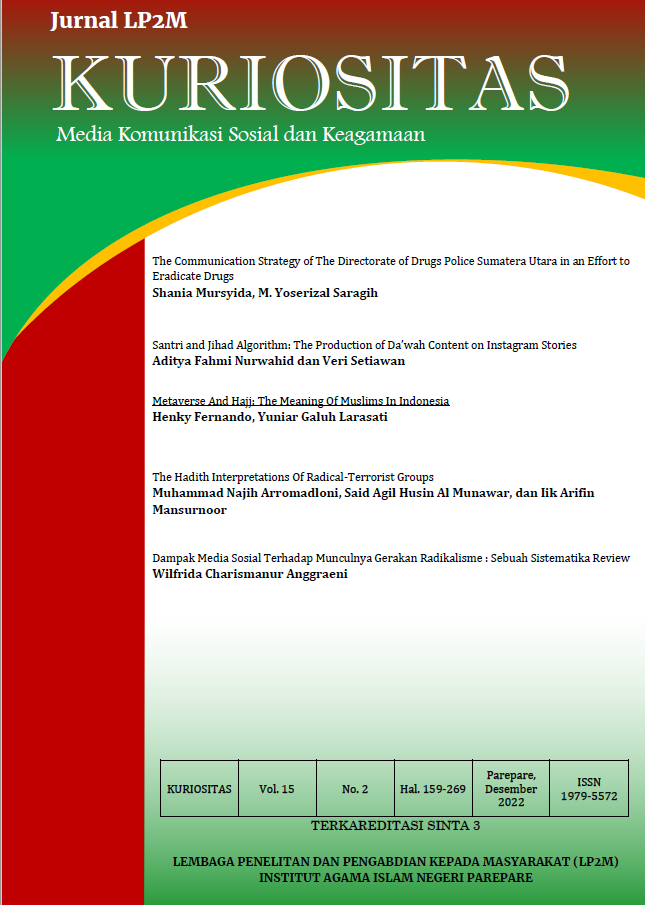
KURIOSITAS: Media Komunikasi Sosial dan Keagamaan, Vol. 15 No. 2 (2022): Kuriositas: Media Komunikasi Sosial dan Keagamaan (Sinta 3)
Abstract
Fazlurrahman's approach to reading the law differs from that of earlier interpreters; yet, his view of the law was essentially a concretization of the paradigm to which they subscribe. The purpose of this article was to examine Fazlurrahman's understanding on the transformation of Islamic law. Utilizing a literature review, the notion of Fazlurrahman's interpretation of Islamic theoanthropocentrism was thoroughly analyzed. According to the findings of the study, Fazlurrahman constructed a worldview that simultaneously centered on God and people. His hypothesis was dubbed the twofold movement theory by Rahman. Rahman has a holistic view of Islamic law. Islamic law was a continuity of faith, Islam, and ihsan doctrines.
Keywords
Download Citation
Endnote/Zotero/Mendeley (RIS)BibTeX
- (1) Abdullah, M. A. (2002). Profil Kompetensi Akademik Lulusan Program Pascasarjana Perguruan Tinggi Agama Islam Dalam Era Masyarakat Berubah. Makalah Disampaikan Dalam Pertemuan Dan Konsultasi Direktur Program Pascasarjana Perguruan Tinggi Agama Islam, Hotel Setiabudi, Jakarta, 24–25.
(2) Abid Rohmanu, M. H. I. (2019). Paradigma Teoantroposentris dalam Konstelasi Tafsir Hukum Islam. IRCiSoD.
(3) Adams, C. C. (2013). Islam and modernism in Egypt. Рипол Классик.
(4) Amin, A. (2012). Islamic Studies diperguran Tinggi, Pendekatan Integratif-Interkoneksi. Yogyakarta: Pustaka Pelajar.
(5) Azizah, N. (2018). Hubungan Ilmu dan Agama dalam Prespektif Islam Telaah Pemikiran Kuntowijoyo. Prosiding Konferensi Integrasi Interkoneksi Islam Dan Sains, 1, 151–156.
(6) Hermanto, E. (2018). Implementasi Teori Tafsir Gerak Ganda Fazlur Rahman Pada Buku Ajar Al-Qur’an Dan Hadist. An-Nida’, 41(1), 31–49.
(7) Humami, Z. (2005). Studi Penerapan Konsep Gerakan Ganda Fazlur Rahman dan Konsep Kritik Nalar Muhammad Arkoun dalam Pembagian Waris. UIN Sunan Kali Jaga.
(8) Mujiati, N., & Yunus, M. (2020). RELIGIUSITAS MEDIA MASSA DALAM PERSPEKTIF TEOANTROPOSENTRIS ISLAM. Jurnal Al-Ijtimaiyyah, 6(2), 65–88.
(9) Muttaqin, L. (2013). Aplikasi Teori Double Movement Fazlur Rahman Terhadap Doktrin Kewarisan Islam Klasik. Al-Manahij: Jurnal Kajian Hukum Islam, 7(2), 195–206.
(10) Peters, R., Bremer, J. M., Peters, P., & van den Hout, T. P. J. (1994). Resurrection, revelation and reason: Husayn al-Jisr (d. 1909) and Islamic eschatology. Hidden Futures: Death and Immortality in Ancient Egypt, Anatolia, the Classical, Biblical and Arabic-Islamic World, 221–231.
(11) Rahman, F. (1984). Islam and modernity: Transformation of an intellectual tradition (Vol. 15). University of Chicago Press.
(12) Rahman, F. (2009). Major Themes of the Qur’an. University of Chicago Press.
(13) Rakhmat, J. (2007). Dahulukan Akhlak di Atas Fiqih. PT Mizan Publika.
(14) Rohmanu, A. (2019). Paradigma Hukum Islam Teoantroposentris: Telaah Paradigmatis Pemikiran Fazlur Rahman dan Abdullah Saeed. Kodifikasia: Jurnal Penelitian Islam, 13(1), 45–66.
(15) Saeed, A. (2006). Fazlur Rahman: a framework for interpreting the ethico-legal. Modern Muslim Intellectuals and the Qur’an, 37.
(16) Soroush, A. K., & Reason, F. (2000). Democracy in Islam, terj. Mahmoud Sadri dan Ahmad Sadr. New York: Oxford University Press.
(17) Supena, I., & Fauzi, M. (2002). Dekonstruksi dan Rekonstruksi Hukum Islam. Yogyakarta: Gama Media.
(18) Susanto, H. (2016). Konsep Paradigma Ilmu-ilmu Sosial dan Relevansinya bagi Perkembangan Pengetahuan. Muaddib: Studi Kependidikan Dan Keislaman, 4(2).
(19) SYAHRUR, F. R. D. A. N. M. (n.d.). PRAKTIK PEMBAGIAN WARIS BERDASARKAN ADAT SAPIKULAN RONGGENDONGAN DITINJAU DARI PERSPEKTIF.
(20) Troll, C. W., & Khan, S. A. (1978). a reinterpretation of Muslim theology. New Delhi.
References
(2) Abid Rohmanu, M. H. I. (2019). Paradigma Teoantroposentris dalam Konstelasi Tafsir Hukum Islam. IRCiSoD.
(3) Adams, C. C. (2013). Islam and modernism in Egypt. Рипол Классик.
(4) Amin, A. (2012). Islamic Studies diperguran Tinggi, Pendekatan Integratif-Interkoneksi. Yogyakarta: Pustaka Pelajar.
(5) Azizah, N. (2018). Hubungan Ilmu dan Agama dalam Prespektif Islam Telaah Pemikiran Kuntowijoyo. Prosiding Konferensi Integrasi Interkoneksi Islam Dan Sains, 1, 151–156.
(6) Hermanto, E. (2018). Implementasi Teori Tafsir Gerak Ganda Fazlur Rahman Pada Buku Ajar Al-Qur’an Dan Hadist. An-Nida’, 41(1), 31–49.
(7) Humami, Z. (2005). Studi Penerapan Konsep Gerakan Ganda Fazlur Rahman dan Konsep Kritik Nalar Muhammad Arkoun dalam Pembagian Waris. UIN Sunan Kali Jaga.
(8) Mujiati, N., & Yunus, M. (2020). RELIGIUSITAS MEDIA MASSA DALAM PERSPEKTIF TEOANTROPOSENTRIS ISLAM. Jurnal Al-Ijtimaiyyah, 6(2), 65–88.
(9) Muttaqin, L. (2013). Aplikasi Teori Double Movement Fazlur Rahman Terhadap Doktrin Kewarisan Islam Klasik. Al-Manahij: Jurnal Kajian Hukum Islam, 7(2), 195–206.
(10) Peters, R., Bremer, J. M., Peters, P., & van den Hout, T. P. J. (1994). Resurrection, revelation and reason: Husayn al-Jisr (d. 1909) and Islamic eschatology. Hidden Futures: Death and Immortality in Ancient Egypt, Anatolia, the Classical, Biblical and Arabic-Islamic World, 221–231.
(11) Rahman, F. (1984). Islam and modernity: Transformation of an intellectual tradition (Vol. 15). University of Chicago Press.
(12) Rahman, F. (2009). Major Themes of the Qur’an. University of Chicago Press.
(13) Rakhmat, J. (2007). Dahulukan Akhlak di Atas Fiqih. PT Mizan Publika.
(14) Rohmanu, A. (2019). Paradigma Hukum Islam Teoantroposentris: Telaah Paradigmatis Pemikiran Fazlur Rahman dan Abdullah Saeed. Kodifikasia: Jurnal Penelitian Islam, 13(1), 45–66.
(15) Saeed, A. (2006). Fazlur Rahman: a framework for interpreting the ethico-legal. Modern Muslim Intellectuals and the Qur’an, 37.
(16) Soroush, A. K., & Reason, F. (2000). Democracy in Islam, terj. Mahmoud Sadri dan Ahmad Sadr. New York: Oxford University Press.
(17) Supena, I., & Fauzi, M. (2002). Dekonstruksi dan Rekonstruksi Hukum Islam. Yogyakarta: Gama Media.
(18) Susanto, H. (2016). Konsep Paradigma Ilmu-ilmu Sosial dan Relevansinya bagi Perkembangan Pengetahuan. Muaddib: Studi Kependidikan Dan Keislaman, 4(2).
(19) SYAHRUR, F. R. D. A. N. M. (n.d.). PRAKTIK PEMBAGIAN WARIS BERDASARKAN ADAT SAPIKULAN RONGGENDONGAN DITINJAU DARI PERSPEKTIF.
(20) Troll, C. W., & Khan, S. A. (1978). a reinterpretation of Muslim theology. New Delhi.