

Article Sidebar
Main Article Content
Abstract
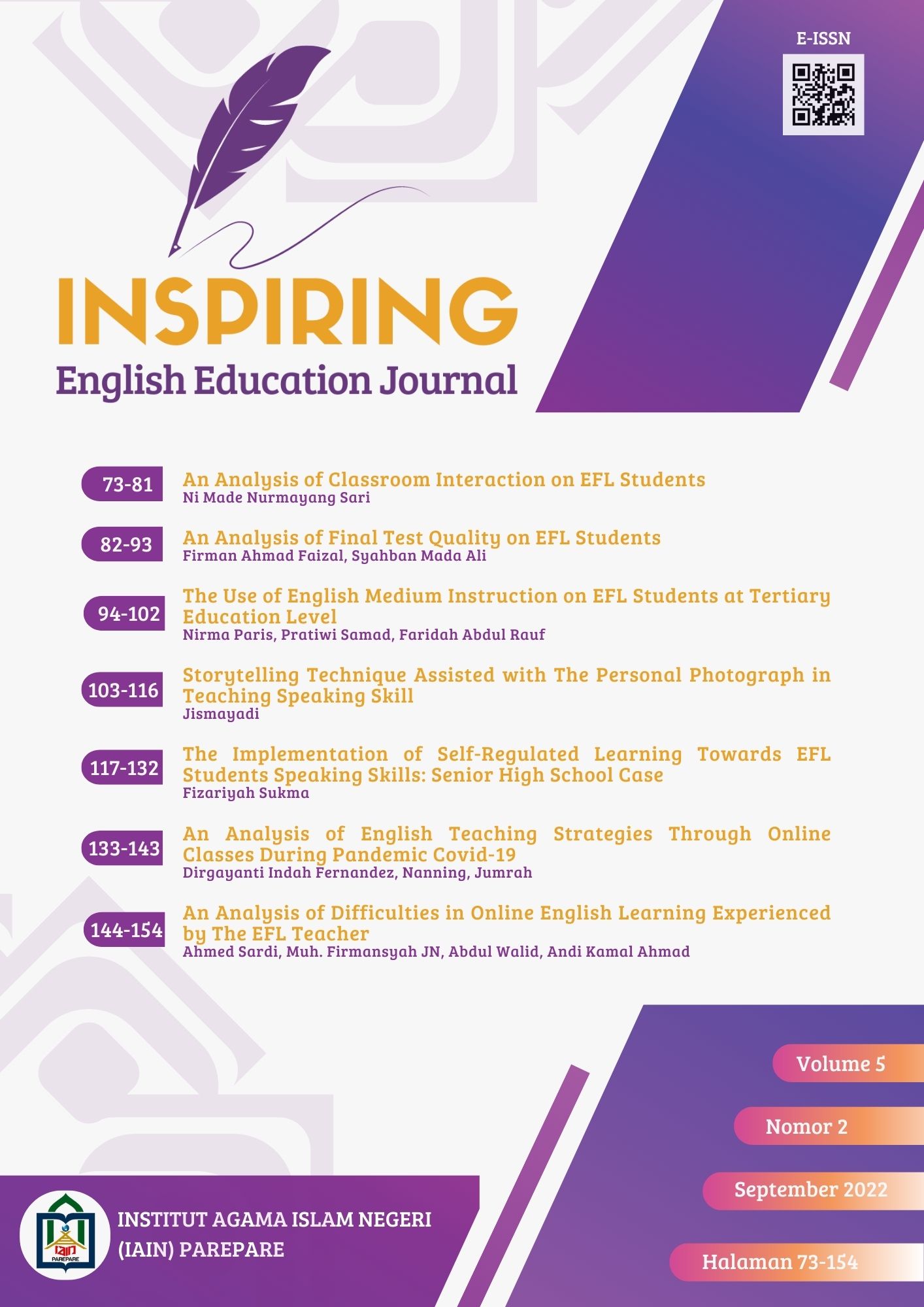
This study aims to determine the nature of classroom interaction carried out by the pre-service teacher and class VII students at SMP Negeri 2 Tejakula. The theories used are Malamah-Thomas (1987) and the IRF classroom pattern. The method used is qualitative with case studies. The instrument in this study was a video recording of the learning process, which was analyzed using naturalistic observations and document analysis. Based on the research, it was found that the teacher and students did several types of classroom interaction, such as teacher speaking to the whole class, teacher speaking to an individual, teacher speaking to a group of students, student speaking to teacher, student speaking to another student, student speaking to group members, and student speaking to the whole class. Based on the IRF classroom pattern, the most dominant pattern is IRF (complete pattern).
Keywords
Article Details
References
- Afriyanto, H. Harahap, A., & Azwandi, A. (2017). An analysis of interactional pattern between teacher and student in SMAN 1 Curup Kota. JOALL (Journal of Applied Linguistics and Literature), 2(1), 94–107. https://doi.org/10.24176/re.v8i2.2353
- Ashari, E., & Shalehoddin, S. (2018). Speech Function on EFL Classroom Discourse Interaction at University of Riau Kepulauan: SFL Theory. ANGLO-SAXON: Journal of the English Language Education Study Program, 9(1).
- Astuti, M. (2011). An analysis of classroom interaction in the English teaching and learning process of the bilingual class in the first grade of SMPN 1 Prambanan. In A Thesis of English Education Department, Faculty of Languages and Arts, Universitas Negeri Yogyakarta.
- Dagarin, M. (2004). Classroom interaction and communication strategies in learning English as a foreign language. ELOPE: English Language Overseas Perspectives and Enquiries, 1(1–2), 127–139.
- Dewi, I. R., & Anwar, C. (2018). Senior High School EFL Teacher and Students’ Use of Classroom Language. JEES (Journal of English Educators Society), 3(1), 105–118.
- Hanum, N. S. (2017). The importance of classroom interaction in the teaching of reading in junior high school. In Prosiding Seminar Nasional Mahasiswa Kerjasama Direktorat Jenderal Guru Dan Tenaga Kependidikan Kemendikbud 2016. http://www.learntechlib.org/p/209367/
- Harismayanti, I., Putra, I. N. A. J., & Santosa, M. H. (2020). Gamification in English Teaching and Learning. In Nilacakra. https://doi.org/10.1525/aeq.1976.7.4.05x1655q
- Husna, A. H., Hartono, R., & Sofwan, A. (2015). TEACHER"TM S AND STUDENTS"TM TALKS AND THEIR NONVERBAL COMMUNICATION IN THE CLASSROOM INTERACTION. English Education Journal, 5(1).
- Malamah-Thomas, D. H. (1987). Community theatre with and by the people: The Sierra Leone experience Pedagogy. Convergence, 20(1), 59. https://doi.org/10.17507/jltr.0901.11
- Nisa, S. H. (2014). Classroom interaction analysis in Indonesian EFL speaking class. English Review: Journal of English Education, 2(2), 124–132. https://www.academicareview.com/index.php/jh/article/view/16
- Putra, I. N. A. J., Nitiasih, P. K., Adnyayanti, N. L. P. E., & Budiarta, L. G. R. (2021). Boosting the Quality of EFL Class Through HOTS-based English Activity Book. In 4th International Conference on Innovative Research Across Disciplines. Atlantis Press., 188–194. https://doi.org/10.2991/icirad-17.2017.26
- Rustandi, A. (2017). An analysis of irf (initiation-response-feedback) on classroom interaction in efl speaking class. EduLite: Journal of English Education, Literature and Culture, 2(1), 239–250.
- Sinclair, J. and Coulthard, M. (1975). Towards an Analysis of Discourse. In Oxford:Oxford University Press (Vol. 5, Issue 1). https://doi.org/10.17509/jlb.v5i1.3131
- Wibowo, Y. S. (2017). Pembelajaran Bahasa Inggris Bagi Anak Usia Dini Versus Budaya Lokal. Cakrawala Dini, 1(3), 1–9.
References
Afriyanto, H. Harahap, A., & Azwandi, A. (2017). An analysis of interactional pattern between teacher and student in SMAN 1 Curup Kota. JOALL (Journal of Applied Linguistics and Literature), 2(1), 94–107. https://doi.org/10.24176/re.v8i2.2353
Ashari, E., & Shalehoddin, S. (2018). Speech Function on EFL Classroom Discourse Interaction at University of Riau Kepulauan: SFL Theory. ANGLO-SAXON: Journal of the English Language Education Study Program, 9(1).
Astuti, M. (2011). An analysis of classroom interaction in the English teaching and learning process of the bilingual class in the first grade of SMPN 1 Prambanan. In A Thesis of English Education Department, Faculty of Languages and Arts, Universitas Negeri Yogyakarta.
Dagarin, M. (2004). Classroom interaction and communication strategies in learning English as a foreign language. ELOPE: English Language Overseas Perspectives and Enquiries, 1(1–2), 127–139.
Dewi, I. R., & Anwar, C. (2018). Senior High School EFL Teacher and Students’ Use of Classroom Language. JEES (Journal of English Educators Society), 3(1), 105–118.
Hanum, N. S. (2017). The importance of classroom interaction in the teaching of reading in junior high school. In Prosiding Seminar Nasional Mahasiswa Kerjasama Direktorat Jenderal Guru Dan Tenaga Kependidikan Kemendikbud 2016. http://www.learntechlib.org/p/209367/
Harismayanti, I., Putra, I. N. A. J., & Santosa, M. H. (2020). Gamification in English Teaching and Learning. In Nilacakra. https://doi.org/10.1525/aeq.1976.7.4.05x1655q
Husna, A. H., Hartono, R., & Sofwan, A. (2015). TEACHER"TM S AND STUDENTS"TM TALKS AND THEIR NONVERBAL COMMUNICATION IN THE CLASSROOM INTERACTION. English Education Journal, 5(1).
Malamah-Thomas, D. H. (1987). Community theatre with and by the people: The Sierra Leone experience Pedagogy. Convergence, 20(1), 59. https://doi.org/10.17507/jltr.0901.11
Nisa, S. H. (2014). Classroom interaction analysis in Indonesian EFL speaking class. English Review: Journal of English Education, 2(2), 124–132. https://www.academicareview.com/index.php/jh/article/view/16
Putra, I. N. A. J., Nitiasih, P. K., Adnyayanti, N. L. P. E., & Budiarta, L. G. R. (2021). Boosting the Quality of EFL Class Through HOTS-based English Activity Book. In 4th International Conference on Innovative Research Across Disciplines. Atlantis Press., 188–194. https://doi.org/10.2991/icirad-17.2017.26
Rustandi, A. (2017). An analysis of irf (initiation-response-feedback) on classroom interaction in efl speaking class. EduLite: Journal of English Education, Literature and Culture, 2(1), 239–250.
Sinclair, J. and Coulthard, M. (1975). Towards an Analysis of Discourse. In Oxford:Oxford University Press (Vol. 5, Issue 1). https://doi.org/10.17509/jlb.v5i1.3131
Wibowo, Y. S. (2017). Pembelajaran Bahasa Inggris Bagi Anak Usia Dini Versus Budaya Lokal. Cakrawala Dini, 1(3), 1–9.