

Article Sidebar
Main Article Content
Abstract
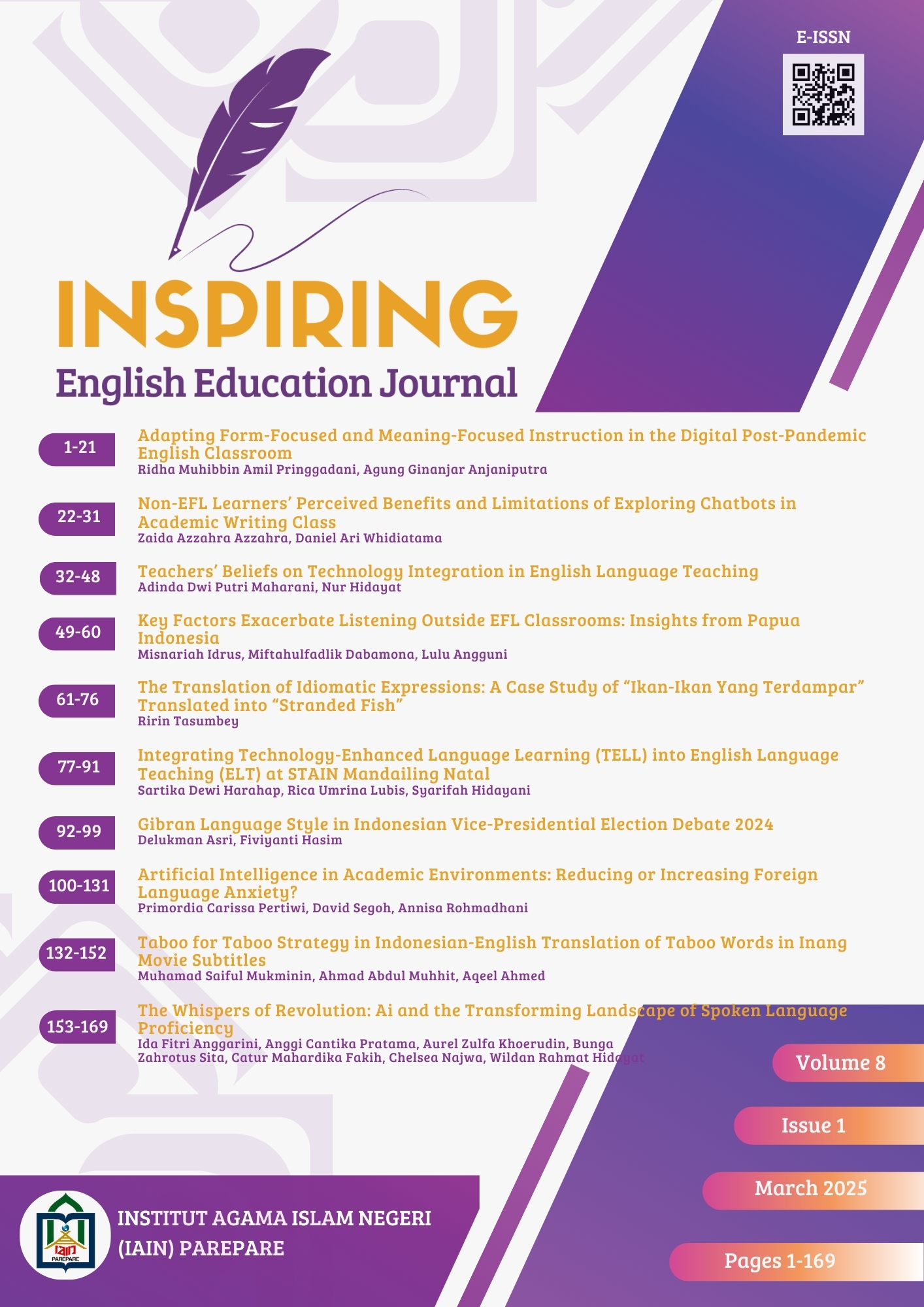
This study explores the integration of Technology-Enhanced Language Learning (TELL) and its impact on English Language Teaching (ELT). The research addresses the issue of how technology influences students' learning experiences in ELT. The study aims to examine students' perspectives on the use of digital tools in language learning and their effectiveness in enhancing the learning process. A case study approach was employed, with data collected through the interactive platform Mentimeter. Fourteen students from the Tadris Bahasa Inggris Study Program at STAIN Mandailing Natal participated by providing their opinions on the integration of technology in ELT during a presentation session. The analysis reveals that the majority of respondents expressed positive perceptions of technology use in ELT. Students highlighted those various digital tools introduce a new dimension to learning, making the process more engaging and accessible. Key benefits identified include easier access to resources, increased interactivity, and greater flexibility in learning. These findings emphasize the significance of incorporating digital tools into language instruction to enhance the overall learning experience.
Keywords
Article Details
References
- Al-Kadi, A. (2018). A Review of Technology Integration in ELT: From CALL to MALL. Language Teaching and Educational Research, 1(1), 1–12.
- Alotumi, M. (2020). The Effect of Computer-Assisted Language Learning Project (CALLP) on Yemeni EFL Student Teachers’ Perceived TPACK Self-Efficacy. International Journal of Research in English Education, 5(4), 14–40. https://doi.org/10.29252/ijree.5.4.14
- Ammade, S., Mahmud, M., Jabu, B., & Tahmir, S. (2018). Integrating Technology in English Language Teaching : Global Experiences and Lessons for Indonesia. 8(6), 107–114. https://doi.org/10.5539/ijel.v8n6p107
- Chen, K. T.-C. (2023). Identifying barriers faced by university EFL instructors in integrating mobile-assisted language learning. Contemporary Educational Technology, 15(4), ep467. https://doi.org/10.30935/cedtech/13621
- Chen, X. L., Zou, D., Xie, H. R., & Su, F. (2021). Twenty-five years of computer-assisted language learning: A topic modeling analysis. Language Learning & Technology, 25(3), 151–185. http://hdl.handle.net/10125/73454
- Enayati, F., & Gilakjani, A. P. (2020). The impact of computer assisted language learning (CALL) on improving intermediate EFL learners’ vocabulary learning. International Journal of Language Education, 4(1), 96–112. https://doi.org/10.26858/ijole.v4i2.10560
- Fatimah, A. S. (2017). Teaching In 21 st Century : Students- Teachers ’ Perceptions Of Technology Use In The Classroom. 2(2).
- Goswami, M. (2018). Exploring the New Perspectives in English Language Teaching: Listening to the CALL (Computer-Assisted Language Learning). IJELLH, 6(6), 402–412.
- Gündüz, N. (2020). Computer assisted language learning. Journal of Language and Linguistic Studies, 16(2), 102–114. https://doi.org/10.1017/S0261444800009988
- Hani, N. A. B. (2014). Benefits and Barriers of Computer Assisted Language Learning and Teaching in the Arab World: Jordan as a Model. Theory and Practice in Language Studies, 4(8), 1609–1615. https://doi.org/10.4304/tpls.4.8.1609-1615
- Idul, M., & Syaiful, S. (2024). Augmented Reality in The Classroom: Revolutionizing Vocabulary Teaching for High School Language Learners. Inspiring: English Education Journal, 7(2), 201-221. https://doi.org/10.35905/inspiring.v7i2.9019
- Indrawan, D., & Jalilah, S. R. (2021). Metode Kombinasi/Campuran Bentuk Integrasi Dalam Penelitian. Jurnal Studi Guru Dan Pembelajaran, 4(3), 735–739. https://doi.org/10.30605/jsgp.4.3.2021.1452
- Lubis, R. U., Harahap, S. D., & Hasibuan, A. (2023). English Language Immersion: Local Wisdom-Based Reading Material for Naposo Nauli Bulung in EFL Context. E-Structural, 6(01), 1–13. https://doi.org/10.33633/es.v6i01.7801
- Mohin, M., Kunzwa, L., & Patel, S. (2022). Using mentimeter to enhance learning and teaching in a large class. International Journal of Educational Policy Research and Review, 9(2), 48–57. https://doi.org/10.15739/ijeprr.22.005
- Muhtar, I. Y., & Pammu, A. (2021). Students ’ Perceptions of The Use Of ‘ TELL ’ in English Learning Process in Bosowa University Makassar. 4(4), 474–484.
- Rafiqa, R., Yasim, S., Paris, N., & Sabil, M. (2024). An Innovative Strategy in Learning English as A Foreign Language. Inspiring: English Education Journal, 7(2), 222-246. https://doi.org/10.35905/inspiring.v7i2.9049
- Samad, P., & Munir, F. S. (2022). The Utilizing of Mentimeter Platform in Enhancing the EFL Students’ English Skills in Digital Era. Edumaspul: Jurnal Pendidikan, 6(2), 1645–1650. https://doi.org/10.33487/edumaspul.v6i2.4380
References
Al-Kadi, A. (2018). A Review of Technology Integration in ELT: From CALL to MALL. Language Teaching and Educational Research, 1(1), 1–12.
Alotumi, M. (2020). The Effect of Computer-Assisted Language Learning Project (CALLP) on Yemeni EFL Student Teachers’ Perceived TPACK Self-Efficacy. International Journal of Research in English Education, 5(4), 14–40. https://doi.org/10.29252/ijree.5.4.14
Ammade, S., Mahmud, M., Jabu, B., & Tahmir, S. (2018). Integrating Technology in English Language Teaching : Global Experiences and Lessons for Indonesia. 8(6), 107–114. https://doi.org/10.5539/ijel.v8n6p107
Chen, K. T.-C. (2023). Identifying barriers faced by university EFL instructors in integrating mobile-assisted language learning. Contemporary Educational Technology, 15(4), ep467. https://doi.org/10.30935/cedtech/13621
Chen, X. L., Zou, D., Xie, H. R., & Su, F. (2021). Twenty-five years of computer-assisted language learning: A topic modeling analysis. Language Learning & Technology, 25(3), 151–185. http://hdl.handle.net/10125/73454
Enayati, F., & Gilakjani, A. P. (2020). The impact of computer assisted language learning (CALL) on improving intermediate EFL learners’ vocabulary learning. International Journal of Language Education, 4(1), 96–112. https://doi.org/10.26858/ijole.v4i2.10560
Fatimah, A. S. (2017). Teaching In 21 st Century : Students- Teachers ’ Perceptions Of Technology Use In The Classroom. 2(2).
Goswami, M. (2018). Exploring the New Perspectives in English Language Teaching: Listening to the CALL (Computer-Assisted Language Learning). IJELLH, 6(6), 402–412.
Gündüz, N. (2020). Computer assisted language learning. Journal of Language and Linguistic Studies, 16(2), 102–114. https://doi.org/10.1017/S0261444800009988
Hani, N. A. B. (2014). Benefits and Barriers of Computer Assisted Language Learning and Teaching in the Arab World: Jordan as a Model. Theory and Practice in Language Studies, 4(8), 1609–1615. https://doi.org/10.4304/tpls.4.8.1609-1615
Idul, M., & Syaiful, S. (2024). Augmented Reality in The Classroom: Revolutionizing Vocabulary Teaching for High School Language Learners. Inspiring: English Education Journal, 7(2), 201-221. https://doi.org/10.35905/inspiring.v7i2.9019
Indrawan, D., & Jalilah, S. R. (2021). Metode Kombinasi/Campuran Bentuk Integrasi Dalam Penelitian. Jurnal Studi Guru Dan Pembelajaran, 4(3), 735–739. https://doi.org/10.30605/jsgp.4.3.2021.1452
Lubis, R. U., Harahap, S. D., & Hasibuan, A. (2023). English Language Immersion: Local Wisdom-Based Reading Material for Naposo Nauli Bulung in EFL Context. E-Structural, 6(01), 1–13. https://doi.org/10.33633/es.v6i01.7801
Mohin, M., Kunzwa, L., & Patel, S. (2022). Using mentimeter to enhance learning and teaching in a large class. International Journal of Educational Policy Research and Review, 9(2), 48–57. https://doi.org/10.15739/ijeprr.22.005
Muhtar, I. Y., & Pammu, A. (2021). Students ’ Perceptions of The Use Of ‘ TELL ’ in English Learning Process in Bosowa University Makassar. 4(4), 474–484.
Rafiqa, R., Yasim, S., Paris, N., & Sabil, M. (2024). An Innovative Strategy in Learning English as A Foreign Language. Inspiring: English Education Journal, 7(2), 222-246. https://doi.org/10.35905/inspiring.v7i2.9049
Samad, P., & Munir, F. S. (2022). The Utilizing of Mentimeter Platform in Enhancing the EFL Students’ English Skills in Digital Era. Edumaspul: Jurnal Pendidikan, 6(2), 1645–1650. https://doi.org/10.33487/edumaspul.v6i2.4380