
Article Sidebar
Main Article Content
Abstract
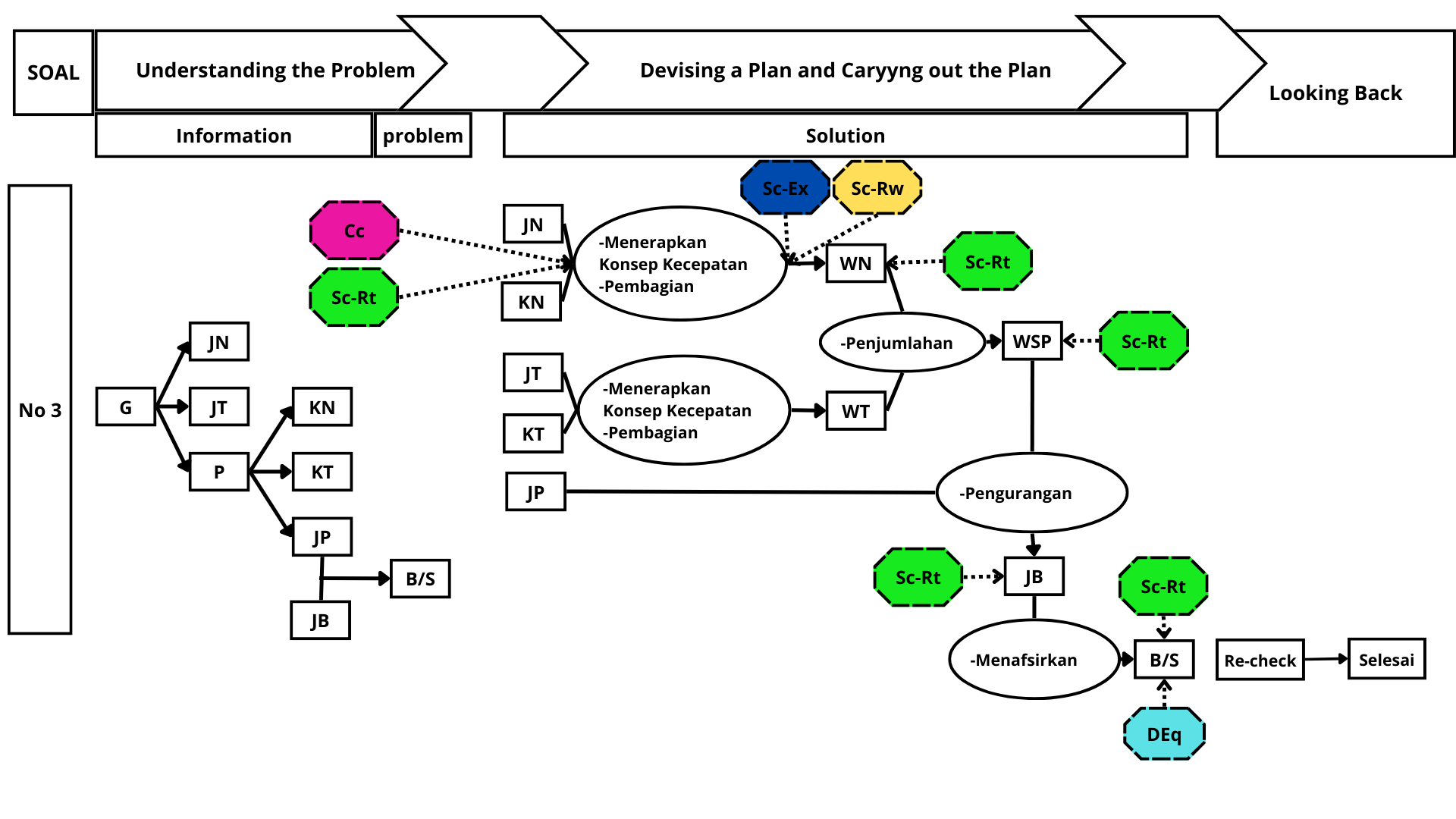
Errors in problem solving indicate that there are parts of the cognitive structure that are problematic, either because they are disorganized, disconnected or experiencing cognitive holes. thinking This research uses a qualitative approach. The data analysis technique used refers to the Miles and Huberman analysis model, namely data reduction, data presentation and finally drawing conclusions. The results showed that the three subjects studied were only S1 subjects who were able to answer all the questions given correctly without going through the defragmenting process, this was because the problem-solving thinking structure of the questions was classified as good, this success was supported by the level of cognitive understanding of the prerequisite material for the questions. good. While on the subject of S2, even though the conclusions of the answers already look correct, in one of the questions, it appears that there is an error in thinking which is categorized as pseudo, this error occurs because of the tendency to only pursue similarity questions and do not emphasize understanding mathematical concepts. The defragmenting efforts given are in the form of cognitive conflict interventions, scaffolding–restructuring and scaffolding explaning. While on the subject of S3, the low literacy ability in reading the test questions, as well as understanding the concept of the prerequisite material for the questions, causes errors at all stages of problem solving. The defragmenting efforts given are scaffolding-explaning intervention, scaffolding restructuring, cognitive conflict, scaffolding-review, disequilibration. The lack of knowledge about the prerequisite material so that more emphasis is placed on providing scaffolding-explaning.
Keywords
Article Details
References
- Abadi, A. P., Subanji, S., & Chandra, T. D. (2017). Diagnosis kesulitan siswa dalam menyelesaikan masalah geometri-PISA melalui pemetaan kognitif dan upaya mengatasinya dengan scaffolding. MENDIDIK: Jurnal Kajian Pendidikan Dan Pengajaran, 3(1), 1–18.
- Allen, C. E., Froustet, M. E., LeBlanc, J. F., Payne, J. N., Priest, A., Reed, J. F., … Payne, J. N. (2020). National Council of Teachers of Mathematics. The Arithmetic Teacher, 29(5), 59. https://doi.org/10.5951/at.29.5.0059
- Anggraini, D., Kusmayadi, T. A., & Pramudya, I. (2018). The characteristics of failure among students who experienced pseudo thinking. Journal of Physics: Conference Series, 1008(1). https://doi.org/10.1088/1742-6596/1008/1/012061
- Anghileri, J. (2006). Scaffolding practices that enhance mathematics learning. Journal of Mathematics Teacher Education, 9(1), 33–52. https://doi.org/10.1007/S10857-006-9005-9
- Ani, E. U., & Rahayu, P. (2018). Profil Kemampuan Pemecahan Masalah Matematika Siswa Berbentuk Soal Cerita Materi Bangun Ruang. Jurnal Riset Pendidikan Dan Inovasi Pembelajaran Matematika (JRPIPM), 1(1), 40. https://doi.org/10.26740/jrpipm.v1n1.p40-49
- Brender, J. (2006). Framework for Meta-Assessment of As- sessment Studies Ethnographic research.
- Buhaerah, B. (2022). Scaffolding Through Cognitive Mapping Based on Diagnosing Student’S Difficulties in Solving Problem. Journal for the Education of Gifted Young Scientists, 10(8), 207–220. https://doi.org/10.17478/jegys.1099807
- Damayanti, P. A., Subanji, S., & Sukoriyanto, S. (2020). Defragmentasi Struktur Berpikir Siswa Impulsif dalam Memecahkan Masalah Geometri. Jurnal Pendidikan: Teori, Penelitian, Dan Pengembangan, 5(3), 290. https://doi.org/10.17977/jptpp.v5i3.13239
- Kholid, M. N., & Ahadiyati, A. (2022). Students’ metacognition in solving non-routine problems. Al-Jabar : Jurnal Pendidikan Matematika, 13(1), 125–138. https://doi.org/10.24042/ajpm.v13i1.11776
- Kumalasari, F., Nusantara, T., & Sa’dijah, C. (2016). Defragmenting struktur berpikir siswa dalam menyelesaikan masalah pertidaksamaan eksponen. Jurnal Pendidikan: Teori, Penelitian, Dan Pengembangan, 1(2), 246–255.
- Kurniati, D., Harimukti, R., & Jamil, N. A. (2016). Kemampuan berpikir tingkat tinggi siswa SMP di Kabupaten Jember dalam menyelesaikan soal berstandar PISA. Jurnal Penelitian Dan Evaluasi Pendidikan, 20(2), 142–155. https://doi.org/10.21831/pep.v20i2.8058
- Labuschagne, A. (2015). Qualitative Research - Airy Fairy or Fundamental? The Qualitative Report, 8(1), 100–103. https://doi.org/10.46743/2160-3715/2003.1901
- Lutfianto, M., Zulkardi, & Hartono, Y. (2013). Unfinished student answer in Pisa mathematics contextual problem. Journal on Mathematics Education, 4(2), 188–193. https://doi.org/10.22342/jme.4.2.552.188-193
- Matthew B. Miles, A. M. H. (1984). Qualitative Data Analysis. In International Legal Materials (Vol. 33). Newbury Park: SAGE Publication. https://doi.org/10.1017/s0020782900036494
- OECD. (2019). Programme for international student assessment (PISA) results from PISA 2018. OECD, pp. 1–10. Retrieved from https://www.oecd.org/pisa/publications/PISA2018_CN_IDN.pdf
- Partnership for 21st Century learning. (2015). 21st Century Student Outcomes. 1–9. Retrieved from http://www.p21.org/our-work/p21-framework
- Pranitasari, D., & Ratu, N. (2020). Analisis Kesalahan Siswa Dalam Menyelesaikan Soal Matematika Pisa Pada Konten Change and Relationship. AKSIOMA: Jurnal Program Studi Pendidikan Matematika, 9(4), 1235. https://doi.org/10.24127/ajpm.v9i4.2685
- Putra, Y. Y., Zulkardi, Z., & Hartono, Y. (2016). Pengembangan Soal Matematika Model PISA Konten Bilangan untuk Mengetahui Kemampuan Literasi Matematika Siswa. Jurnal Elemen, 2(1), 14. https://doi.org/10.29408/jel.v2i1.175
- Ratu Firdausi Rahman, I. R. D. N. (2021). Analisis Kesalahan Siswa Dalam Menyelesaikan Soal Pemecahan Masalah Matematika Berdasarkan Teori Newman. Hipotenusa Journal of Research Mathematics Education (HJRME), 4(2), 102–113. https://doi.org/10.36269/hjrme.v4i2.499
- Rofi’ah, N., Ansori, H., & Mawaddah, S. (2019). Analisis Kesalahan Siswa Dalam Menyelesaikan Soal Cerita Matematika Berdasarkan Langkah Penyelesaian Polya. EDU-MAT: Jurnal Pendidikan Matematika, 7(2), 120. https://doi.org/10.20527/edumat.v7i2.7379
- Subanji. (2015a). Teori Kesalahan Konstruksi Konsep dan Pemecahan Masalah Matematika (1st ed.). Malang: UM Press.
- Subanji. (2015b). Teori Kesalahan Kontruksi Konsep dan Pemecahan Masalah Matematika. Malang: UM Press.
- Subanji. (2016). Teori Defragmentasi Strukttur Berpikir (1st ed.). Malang: UM Press.
- Teresa, H., Zubaidah, Z., & Nursangaji, A. (2020). Kemampuan Menyelesaikan Soal Pisa Pada Konten Change and Relationship. Jurnal AlphaEuclidEdu, 1(2), 60. https://doi.org/10.26418/ja.v1i2.42879
- Utami, R. W., & Wutsqa, D. U. (2017). Analisis kemampuan pemecahan masalah matematika dan self-efficacy siswa SMP negeri di Kabupaten Ciamis. Jurnal Riset Pendidikan Matematika, 4(2), 166. https://doi.org/10.21831/jrpm.v4i2.14897
- Vinner, S. (1997). The Pseudo-Conceptual And The Pseudo-Analytical Thought Processes In Mathematics Learning. Educational Studies in Mathematics, 97–129. https://doi.org/10.1023/A:1002998529016
- Wahab, A. (2022). Penerapan Model Kooperatif Tipe Jigsaw Terhadap Peningkatan Keaktifan Belajar Matematika. Jurnal Ilmiah Pendidikan Matematika Al-Qalasadi, 10(1), 81–88. https://doi.org/10.32505/qalasadi.v6i1.3718
- Wibawa, A. (2017). Pseudo Siswa Dalam Memecahkan Masalah Limit Fungsi. Nasional Exchange of Expriences Teacher Quality Improvement Program.
References
Abadi, A. P., Subanji, S., & Chandra, T. D. (2017). Diagnosis kesulitan siswa dalam menyelesaikan masalah geometri-PISA melalui pemetaan kognitif dan upaya mengatasinya dengan scaffolding. MENDIDIK: Jurnal Kajian Pendidikan Dan Pengajaran, 3(1), 1–18.
Allen, C. E., Froustet, M. E., LeBlanc, J. F., Payne, J. N., Priest, A., Reed, J. F., … Payne, J. N. (2020). National Council of Teachers of Mathematics. The Arithmetic Teacher, 29(5), 59. https://doi.org/10.5951/at.29.5.0059
Anggraini, D., Kusmayadi, T. A., & Pramudya, I. (2018). The characteristics of failure among students who experienced pseudo thinking. Journal of Physics: Conference Series, 1008(1). https://doi.org/10.1088/1742-6596/1008/1/012061
Anghileri, J. (2006). Scaffolding practices that enhance mathematics learning. Journal of Mathematics Teacher Education, 9(1), 33–52. https://doi.org/10.1007/S10857-006-9005-9
Ani, E. U., & Rahayu, P. (2018). Profil Kemampuan Pemecahan Masalah Matematika Siswa Berbentuk Soal Cerita Materi Bangun Ruang. Jurnal Riset Pendidikan Dan Inovasi Pembelajaran Matematika (JRPIPM), 1(1), 40. https://doi.org/10.26740/jrpipm.v1n1.p40-49
Brender, J. (2006). Framework for Meta-Assessment of As- sessment Studies Ethnographic research.
Buhaerah, B. (2022). Scaffolding Through Cognitive Mapping Based on Diagnosing Student’S Difficulties in Solving Problem. Journal for the Education of Gifted Young Scientists, 10(8), 207–220. https://doi.org/10.17478/jegys.1099807
Damayanti, P. A., Subanji, S., & Sukoriyanto, S. (2020). Defragmentasi Struktur Berpikir Siswa Impulsif dalam Memecahkan Masalah Geometri. Jurnal Pendidikan: Teori, Penelitian, Dan Pengembangan, 5(3), 290. https://doi.org/10.17977/jptpp.v5i3.13239
Kholid, M. N., & Ahadiyati, A. (2022). Students’ metacognition in solving non-routine problems. Al-Jabar : Jurnal Pendidikan Matematika, 13(1), 125–138. https://doi.org/10.24042/ajpm.v13i1.11776
Kumalasari, F., Nusantara, T., & Sa’dijah, C. (2016). Defragmenting struktur berpikir siswa dalam menyelesaikan masalah pertidaksamaan eksponen. Jurnal Pendidikan: Teori, Penelitian, Dan Pengembangan, 1(2), 246–255.
Kurniati, D., Harimukti, R., & Jamil, N. A. (2016). Kemampuan berpikir tingkat tinggi siswa SMP di Kabupaten Jember dalam menyelesaikan soal berstandar PISA. Jurnal Penelitian Dan Evaluasi Pendidikan, 20(2), 142–155. https://doi.org/10.21831/pep.v20i2.8058
Labuschagne, A. (2015). Qualitative Research - Airy Fairy or Fundamental? The Qualitative Report, 8(1), 100–103. https://doi.org/10.46743/2160-3715/2003.1901
Lutfianto, M., Zulkardi, & Hartono, Y. (2013). Unfinished student answer in Pisa mathematics contextual problem. Journal on Mathematics Education, 4(2), 188–193. https://doi.org/10.22342/jme.4.2.552.188-193
Matthew B. Miles, A. M. H. (1984). Qualitative Data Analysis. In International Legal Materials (Vol. 33). Newbury Park: SAGE Publication. https://doi.org/10.1017/s0020782900036494
OECD. (2019). Programme for international student assessment (PISA) results from PISA 2018. OECD, pp. 1–10. Retrieved from https://www.oecd.org/pisa/publications/PISA2018_CN_IDN.pdf
Partnership for 21st Century learning. (2015). 21st Century Student Outcomes. 1–9. Retrieved from http://www.p21.org/our-work/p21-framework
Pranitasari, D., & Ratu, N. (2020). Analisis Kesalahan Siswa Dalam Menyelesaikan Soal Matematika Pisa Pada Konten Change and Relationship. AKSIOMA: Jurnal Program Studi Pendidikan Matematika, 9(4), 1235. https://doi.org/10.24127/ajpm.v9i4.2685
Putra, Y. Y., Zulkardi, Z., & Hartono, Y. (2016). Pengembangan Soal Matematika Model PISA Konten Bilangan untuk Mengetahui Kemampuan Literasi Matematika Siswa. Jurnal Elemen, 2(1), 14. https://doi.org/10.29408/jel.v2i1.175
Ratu Firdausi Rahman, I. R. D. N. (2021). Analisis Kesalahan Siswa Dalam Menyelesaikan Soal Pemecahan Masalah Matematika Berdasarkan Teori Newman. Hipotenusa Journal of Research Mathematics Education (HJRME), 4(2), 102–113. https://doi.org/10.36269/hjrme.v4i2.499
Rofi’ah, N., Ansori, H., & Mawaddah, S. (2019). Analisis Kesalahan Siswa Dalam Menyelesaikan Soal Cerita Matematika Berdasarkan Langkah Penyelesaian Polya. EDU-MAT: Jurnal Pendidikan Matematika, 7(2), 120. https://doi.org/10.20527/edumat.v7i2.7379
Subanji. (2015a). Teori Kesalahan Konstruksi Konsep dan Pemecahan Masalah Matematika (1st ed.). Malang: UM Press.
Subanji. (2015b). Teori Kesalahan Kontruksi Konsep dan Pemecahan Masalah Matematika. Malang: UM Press.
Subanji. (2016). Teori Defragmentasi Strukttur Berpikir (1st ed.). Malang: UM Press.
Teresa, H., Zubaidah, Z., & Nursangaji, A. (2020). Kemampuan Menyelesaikan Soal Pisa Pada Konten Change and Relationship. Jurnal AlphaEuclidEdu, 1(2), 60. https://doi.org/10.26418/ja.v1i2.42879
Utami, R. W., & Wutsqa, D. U. (2017). Analisis kemampuan pemecahan masalah matematika dan self-efficacy siswa SMP negeri di Kabupaten Ciamis. Jurnal Riset Pendidikan Matematika, 4(2), 166. https://doi.org/10.21831/jrpm.v4i2.14897
Vinner, S. (1997). The Pseudo-Conceptual And The Pseudo-Analytical Thought Processes In Mathematics Learning. Educational Studies in Mathematics, 97–129. https://doi.org/10.1023/A:1002998529016
Wahab, A. (2022). Penerapan Model Kooperatif Tipe Jigsaw Terhadap Peningkatan Keaktifan Belajar Matematika. Jurnal Ilmiah Pendidikan Matematika Al-Qalasadi, 10(1), 81–88. https://doi.org/10.32505/qalasadi.v6i1.3718
Wibawa, A. (2017). Pseudo Siswa Dalam Memecahkan Masalah Limit Fungsi. Nasional Exchange of Expriences Teacher Quality Improvement Program.