
Article Sidebar
Main Article Content
Abstract
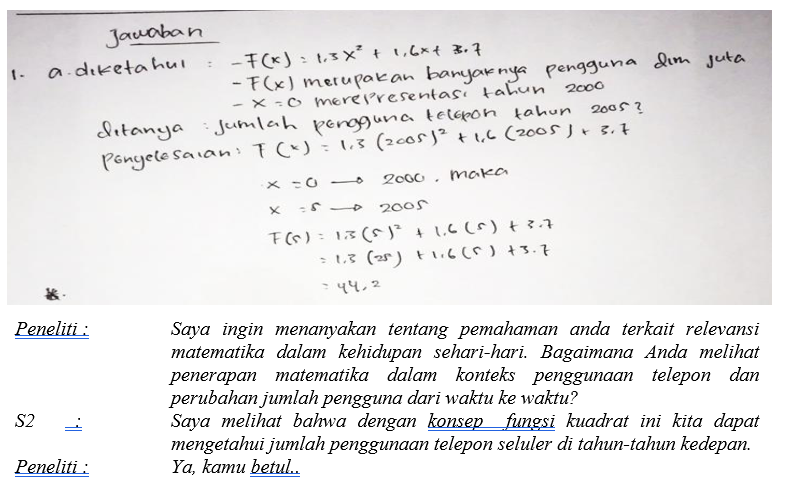
Mathematical connection skills are important because they support students to understand a concept substantially and help them to increase their understanding of other disciplines through the connection between mathematical concepts and concepts from other disciplines. The aim of this research is to determine students' mathematical connection abilities based on numeracy literacy in solving algebra problems. The method used in this research is descriptive qualitative. The subjects in this study were 3 people who met the indicators of mathematical connection ability, consisting of one person with low ability, one person with medium ability, and one person with high ability. The instruments used were an interview guide and a mathematical connection ability test. The results of the research show that students with high ability meet all indicators of mathematical connection, students with moderate ability meet several indicators of mathematical ability, and students with low ability do not meet all indicators of mathematical connection ability. It is hoped that the results of this research will provide a better understanding of students' mathematical connection abilities in solving algebra problems. With a better understanding of the importance of mathematical connections in substantially understanding mathematical concepts, it is hoped that it can encourage the development of learning strategies that can improve students' mathematical connection abilities at school. It is also hoped that the results of this research can make a positive contribution in efforts to improve students' understanding and mathematical skills.
Keywords
Article Details
References
- Acharya, B. R. (2017). Factors affecting difficulties in learning mathematics by mathematics learners. International Journal of Elementary Education, 6(2), 8-15.
- Bernard, M., & Senjayawati, E. (2019). Developing the students’ ability in understanding mathematics and self-confidence with VBA for Excel. JRAMathEdu (Journal of Research and Advances in Mathematics Education), 4(1), 45-56.
- Bernard, M., Nurmala, N., Mariam, S., & Rustyani, N. (2018). Analisis Kemampuan Pemecahan Masalah Matematis Siswa SMP Kelas IX Pada Materi Bangun Datar. SJM (Supremum Journal of Mathematics Education), 2(2), 77-83.
- Brezavšcek, A., Jerebic, J., Rus, G., & Žnidarši, A. (2020). Factors Influencing Mathematics Achievement of University Students of Social Sciences. MDPI, 8, 2134.
- Dwiwandira, N. R., & Tsurayya, A. (2021). Analisis Kemampuan Koneksi Matematis Siswa SMA Kelas XI dalam Menyelesaikan Soal Materi Pengaplikasian Kalkulus pada Turunan. Jurnal Cendekia: Jurnal Pendidikan Matematika, 5(3), 2560-2569.
- Hadin, H., Pauji, H. M., & Aripin, U. (2018). Analisis Kemampuan Koneksi Matematik Siswa MTS Ditinjau Dari Self Regulated Learning. JPMI (Jurnal Pembelajaran Matematika Inovatif), 1(4), 657-666.
- Han, W., Susanto, D., Dewayani, S., Pandora, P., Hanifah, N., Miftahussururi, M., ... & Akbari, Q. S. (2017). Materi pendukung literasi numerasi.
- Hendriana, H., & Soemarmo, U. (2014). Penilaian Pembelajaran Matematika. Bandung: PT Refika Aditama.
- Hendriana, H., Eti Rohaeti, E., & Hidayat, W. (2017). Metaphorical thinking learning and junior high school teachers’ mathematical questioning ability. Journal on Mathematics Education, 8(1).
- Hendriana, H., Rohaeti, E.E., & Sumarno, U. (2018). Hard Skill dan Soft Skill Matematik Siswa, Bandung: PT Rafika Aditama, h. 84.
- Hendriana, H., Slamet, U. R., & Sumarmo, U. (2014). Mathematical connection ability and self-confidence (an experiment on junior high school students through contextual teaching and learning with mathematical manipulative). International Journal of Education, 8(1), 1-11.
- Hendriana, H., Slamet, U. R., & Sumarmo, U. (2014). Mathematical connection ability and self-confidence (an experiment on junior high school students through contextual teaching and learning with mathematical manipulative). International Journal of Education, 8(1), 1-11.
- Islamiah, N., Purwaningsih, W. E., Akbar, P., & Bernard, M. (2018). Analisis Hubungan Kemampuan Pemecahan Masalah Matematis dan Self Confidence Siswa SMP. Journal on Education,1(1), 47-57.
- Kaur, B., dan Lam, T.T. (2012). Reasoning, Coummunication and Connection in Mathematics. Buku Online. World Scientific Publishing, 5 Toh Tuck Link.
- Kenedi, A. K., Helsa, Y., Ariani, Y., Zainil, M., & Hendri, S. (2019). Mathematical Connection of Elementary School Students to Solve Mathematical Problems. Journal on Mathematics Education, 10(1), 69-80.
- Kusuma, D.A. (2008). Meningkatkan Kemampuan Koneksi Matematik dengan Menggunakan Pendekatan Konstruktivisme. Diakses dari http://pustaka.unpad.ac.id/wp.content/up loads/2009/06/meningkatkankemampua n-koneksi-matematik.pdf
- National Council of Teachers of Mathematics [NCTM]. 2000. Principles and standards for school mathematics. Reston: National Council of Teachers of Mathematics
- Nufus, H & Muhammad, I. (2018). Penerapan Creative Problem Solving Berbantuan Software Autograph Untuk Meningkatkan Kemampuan Koneksi Matematika Siswa, UNION: Jurnal Pendidikan Matematika, 6(3), h. 370.
- Putra, Y. Y., & Vebrian, R. (2019). Literasi matematika (mathematical literacy) soal matematika model pisa menggunakan konteks bangka belitung. Deepublish.
- Rawa, N. R., Sutawidjaja, A., & Sudirman, S. (2016). Pengembangan Perangkat Pembelajaran Berbasis Model Learning Cycle-7e pada Materi Trigonometri untuk Meningkatkan Kemampuan Koneksi Matematis Siswa. Jurnal Pendidikan: Teori, Penelitian, dan Pengembangan, 1(6), 1042-1055.
- Rifa’I, A & Anni, C.T. (2012). Psikologi Pendidikan, (Pusat Pengembangan MKU/MKDK-LP3 Universitas Negeri Semarang), 31-32.
- Rohendi, Dedi & Dulpaja, Jojon. (2013). Connected Mathematics Project (CMP) Model Based on Presentation Media to the Mathematical Connection Ability of Junior High School Student. Journal of Education and Practice, 4(4), 17-22.
- Salvia, N. Z., Sabrina, F. P., & Maula, I. (2022, January). Analisis kemampuan literasi numerasi peserta didik ditinjau dari kecemasan matematika. In ProSANDIKA UNIKAL (Prosiding Seminar Nasional Pendidikan Matematika Universitas Pekalongan), 3(1), 351-360.
- Sari, P.C., Mutmainah, D.S., & Setiawan, W. (2019). Analisis Kemampuan Koneksi Matematik ditinjau dari Kemampuan Awal Matematika Siswa SMP pada Materi Persamaan Garis Lurus. Suska Journal of Mathematics Education. 5(1), h. 31.
- Siregar, N. D., & Surya, E. (2017). Analysis of students’ junior high school mathematical connection ability. International Journal of Sciences: Basic and Applied Research (IJSBAR), 33(2), 309-320.
- Sumarmo, U., Hidayat, W., Zulkarnaen, R., Hamidah, M., & Sariningsih, R. (2012). Kemampuan dan disposisi berpikir logis, kritis, dan kreatif matematis (Eksperimen terhadap siswa SMA menggunakan pembelajaran berbasis masalah dan strategi think-talk-write). Jurnal Pengajaran MIPA UPI, 17(1), 17–33
- Sumarmo. (2006). Pembelajaran Keterampilan Membaca Matematika pada Siswa Sekolah Menengah. Bandung: FMIPA Universitas Pendidikan Indonesia
- Sundawan, M.D. (2016). Perbedaan Model Pembelajaran Konstruktivisme dan Model Pembelajaran Langsung, Jurnal Logika, Vol. XVI, No. 1, 2016
- Umbara, U. (2017). Psikologi Pembelajaran Matematika (melaksanakan pembelajaran matematika berdasarkan tinjauan psikologi). Deepublish.
- Wardhani, S. 2008. Analisis SI dan SKL Mata Pelajaran Matematika SMP/MTs untuk Optimalisasi Tujuan Mata Pelajaran Matematika. Yogyakarta: PPPPTK Matematika
- Warih, P. D., Parta, I. N., & Rahardjo, S. (2016). Analisis Kemampuan Koneksi Matematis Siswa Kelas VIII Pada Materi Teorema Pythagoras. Prosiding Konferensi Nasional Penelitian Matematika Dan Pembelajarannya [KNPMP I] Universitas Muhammadiyah Surakarta, Malang: Universitas Negeri Malang, 377–384.
- Widiyawati, W., Septian, A., & Inayah, S. (2020). Analisis kemampuan koneksi matematis siswa SMK pada materi trigonometri. Jurnal Analisa, 6(1), 28-39.
References
Acharya, B. R. (2017). Factors affecting difficulties in learning mathematics by mathematics learners. International Journal of Elementary Education, 6(2), 8-15.
Bernard, M., & Senjayawati, E. (2019). Developing the students’ ability in understanding mathematics and self-confidence with VBA for Excel. JRAMathEdu (Journal of Research and Advances in Mathematics Education), 4(1), 45-56.
Bernard, M., Nurmala, N., Mariam, S., & Rustyani, N. (2018). Analisis Kemampuan Pemecahan Masalah Matematis Siswa SMP Kelas IX Pada Materi Bangun Datar. SJM (Supremum Journal of Mathematics Education), 2(2), 77-83.
Brezavšcek, A., Jerebic, J., Rus, G., & Žnidarši, A. (2020). Factors Influencing Mathematics Achievement of University Students of Social Sciences. MDPI, 8, 2134.
Dwiwandira, N. R., & Tsurayya, A. (2021). Analisis Kemampuan Koneksi Matematis Siswa SMA Kelas XI dalam Menyelesaikan Soal Materi Pengaplikasian Kalkulus pada Turunan. Jurnal Cendekia: Jurnal Pendidikan Matematika, 5(3), 2560-2569.
Hadin, H., Pauji, H. M., & Aripin, U. (2018). Analisis Kemampuan Koneksi Matematik Siswa MTS Ditinjau Dari Self Regulated Learning. JPMI (Jurnal Pembelajaran Matematika Inovatif), 1(4), 657-666.
Han, W., Susanto, D., Dewayani, S., Pandora, P., Hanifah, N., Miftahussururi, M., ... & Akbari, Q. S. (2017). Materi pendukung literasi numerasi.
Hendriana, H., & Soemarmo, U. (2014). Penilaian Pembelajaran Matematika. Bandung: PT Refika Aditama.
Hendriana, H., Eti Rohaeti, E., & Hidayat, W. (2017). Metaphorical thinking learning and junior high school teachers’ mathematical questioning ability. Journal on Mathematics Education, 8(1).
Hendriana, H., Rohaeti, E.E., & Sumarno, U. (2018). Hard Skill dan Soft Skill Matematik Siswa, Bandung: PT Rafika Aditama, h. 84.
Hendriana, H., Slamet, U. R., & Sumarmo, U. (2014). Mathematical connection ability and self-confidence (an experiment on junior high school students through contextual teaching and learning with mathematical manipulative). International Journal of Education, 8(1), 1-11.
Hendriana, H., Slamet, U. R., & Sumarmo, U. (2014). Mathematical connection ability and self-confidence (an experiment on junior high school students through contextual teaching and learning with mathematical manipulative). International Journal of Education, 8(1), 1-11.
Islamiah, N., Purwaningsih, W. E., Akbar, P., & Bernard, M. (2018). Analisis Hubungan Kemampuan Pemecahan Masalah Matematis dan Self Confidence Siswa SMP. Journal on Education,1(1), 47-57.
Kaur, B., dan Lam, T.T. (2012). Reasoning, Coummunication and Connection in Mathematics. Buku Online. World Scientific Publishing, 5 Toh Tuck Link.
Kenedi, A. K., Helsa, Y., Ariani, Y., Zainil, M., & Hendri, S. (2019). Mathematical Connection of Elementary School Students to Solve Mathematical Problems. Journal on Mathematics Education, 10(1), 69-80.
Kusuma, D.A. (2008). Meningkatkan Kemampuan Koneksi Matematik dengan Menggunakan Pendekatan Konstruktivisme. Diakses dari http://pustaka.unpad.ac.id/wp.content/up loads/2009/06/meningkatkankemampua n-koneksi-matematik.pdf
National Council of Teachers of Mathematics [NCTM]. 2000. Principles and standards for school mathematics. Reston: National Council of Teachers of Mathematics
Nufus, H & Muhammad, I. (2018). Penerapan Creative Problem Solving Berbantuan Software Autograph Untuk Meningkatkan Kemampuan Koneksi Matematika Siswa, UNION: Jurnal Pendidikan Matematika, 6(3), h. 370.
Putra, Y. Y., & Vebrian, R. (2019). Literasi matematika (mathematical literacy) soal matematika model pisa menggunakan konteks bangka belitung. Deepublish.
Rawa, N. R., Sutawidjaja, A., & Sudirman, S. (2016). Pengembangan Perangkat Pembelajaran Berbasis Model Learning Cycle-7e pada Materi Trigonometri untuk Meningkatkan Kemampuan Koneksi Matematis Siswa. Jurnal Pendidikan: Teori, Penelitian, dan Pengembangan, 1(6), 1042-1055.
Rifa’I, A & Anni, C.T. (2012). Psikologi Pendidikan, (Pusat Pengembangan MKU/MKDK-LP3 Universitas Negeri Semarang), 31-32.
Rohendi, Dedi & Dulpaja, Jojon. (2013). Connected Mathematics Project (CMP) Model Based on Presentation Media to the Mathematical Connection Ability of Junior High School Student. Journal of Education and Practice, 4(4), 17-22.
Salvia, N. Z., Sabrina, F. P., & Maula, I. (2022, January). Analisis kemampuan literasi numerasi peserta didik ditinjau dari kecemasan matematika. In ProSANDIKA UNIKAL (Prosiding Seminar Nasional Pendidikan Matematika Universitas Pekalongan), 3(1), 351-360.
Sari, P.C., Mutmainah, D.S., & Setiawan, W. (2019). Analisis Kemampuan Koneksi Matematik ditinjau dari Kemampuan Awal Matematika Siswa SMP pada Materi Persamaan Garis Lurus. Suska Journal of Mathematics Education. 5(1), h. 31.
Siregar, N. D., & Surya, E. (2017). Analysis of students’ junior high school mathematical connection ability. International Journal of Sciences: Basic and Applied Research (IJSBAR), 33(2), 309-320.
Sumarmo, U., Hidayat, W., Zulkarnaen, R., Hamidah, M., & Sariningsih, R. (2012). Kemampuan dan disposisi berpikir logis, kritis, dan kreatif matematis (Eksperimen terhadap siswa SMA menggunakan pembelajaran berbasis masalah dan strategi think-talk-write). Jurnal Pengajaran MIPA UPI, 17(1), 17–33
Sumarmo. (2006). Pembelajaran Keterampilan Membaca Matematika pada Siswa Sekolah Menengah. Bandung: FMIPA Universitas Pendidikan Indonesia
Sundawan, M.D. (2016). Perbedaan Model Pembelajaran Konstruktivisme dan Model Pembelajaran Langsung, Jurnal Logika, Vol. XVI, No. 1, 2016
Umbara, U. (2017). Psikologi Pembelajaran Matematika (melaksanakan pembelajaran matematika berdasarkan tinjauan psikologi). Deepublish.
Wardhani, S. 2008. Analisis SI dan SKL Mata Pelajaran Matematika SMP/MTs untuk Optimalisasi Tujuan Mata Pelajaran Matematika. Yogyakarta: PPPPTK Matematika
Warih, P. D., Parta, I. N., & Rahardjo, S. (2016). Analisis Kemampuan Koneksi Matematis Siswa Kelas VIII Pada Materi Teorema Pythagoras. Prosiding Konferensi Nasional Penelitian Matematika Dan Pembelajarannya [KNPMP I] Universitas Muhammadiyah Surakarta, Malang: Universitas Negeri Malang, 377–384.
Widiyawati, W., Septian, A., & Inayah, S. (2020). Analisis kemampuan koneksi matematis siswa SMK pada materi trigonometri. Jurnal Analisa, 6(1), 28-39.